A blazer can fit correctly through the shoulders and still feel strangely out of step with the rest of an outfit. Often the issue is not body shape in the usual label-based sense, but where the hem, button and trouser waistband divide the visible torso. Those lines change when you swap jeans for tailored trousers or wear a knit underneath. The useful question is therefore not which blazer length you are supposed to wear. It is which version works with your proportions, clothes and ordinary movements.
The landmarks that make blazer length look intentional
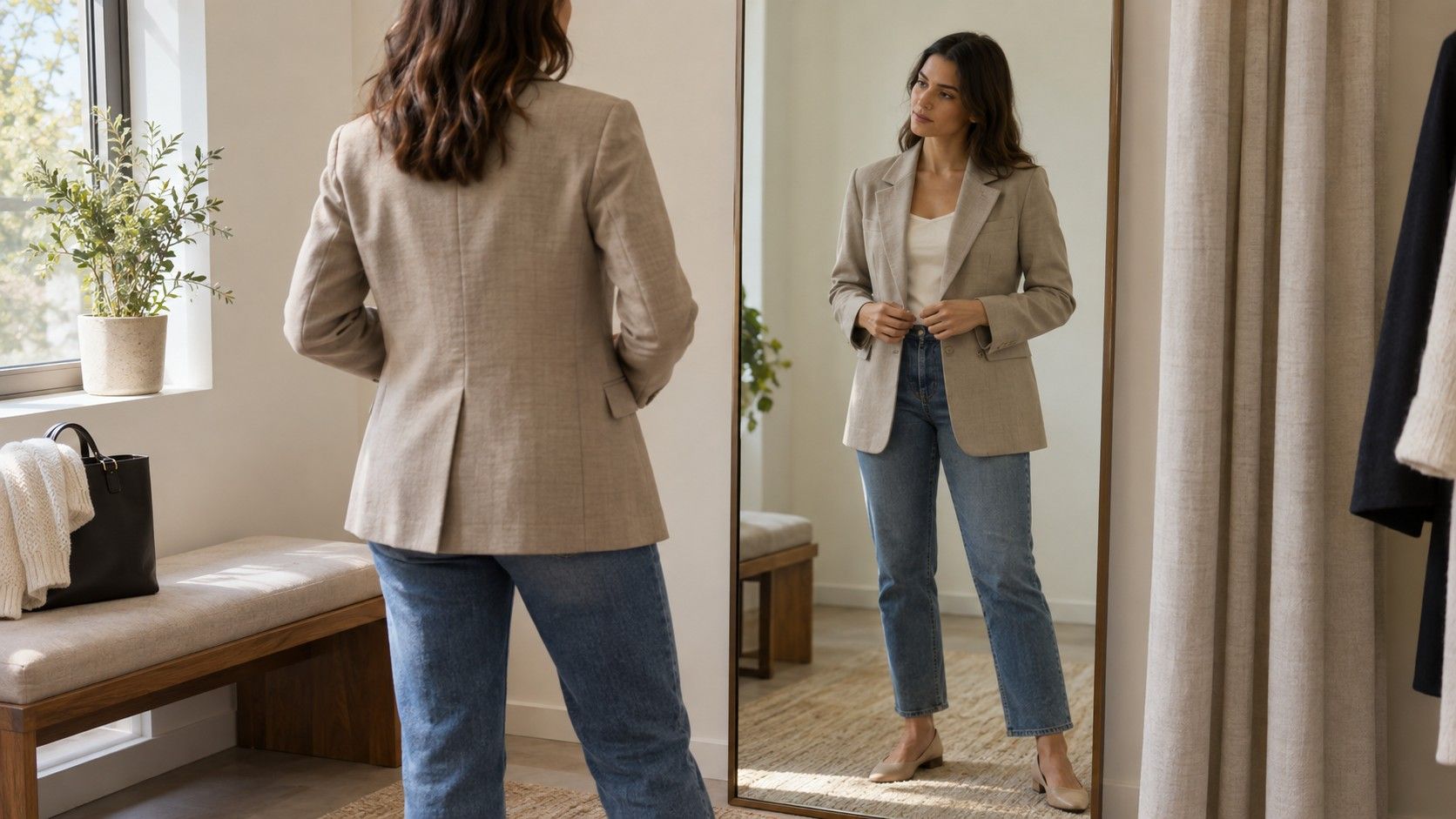
Start by ignoring the size label and noticing where the hem falls on you. A cropped blazer may end above the top of the hip, a classic single-breasted style often reaches around the high or fullest hip, and a longline blazer may cover much of the seat. None of these positions is automatically more flattering. Each creates a different break between the upper body and whatever you wear below it.
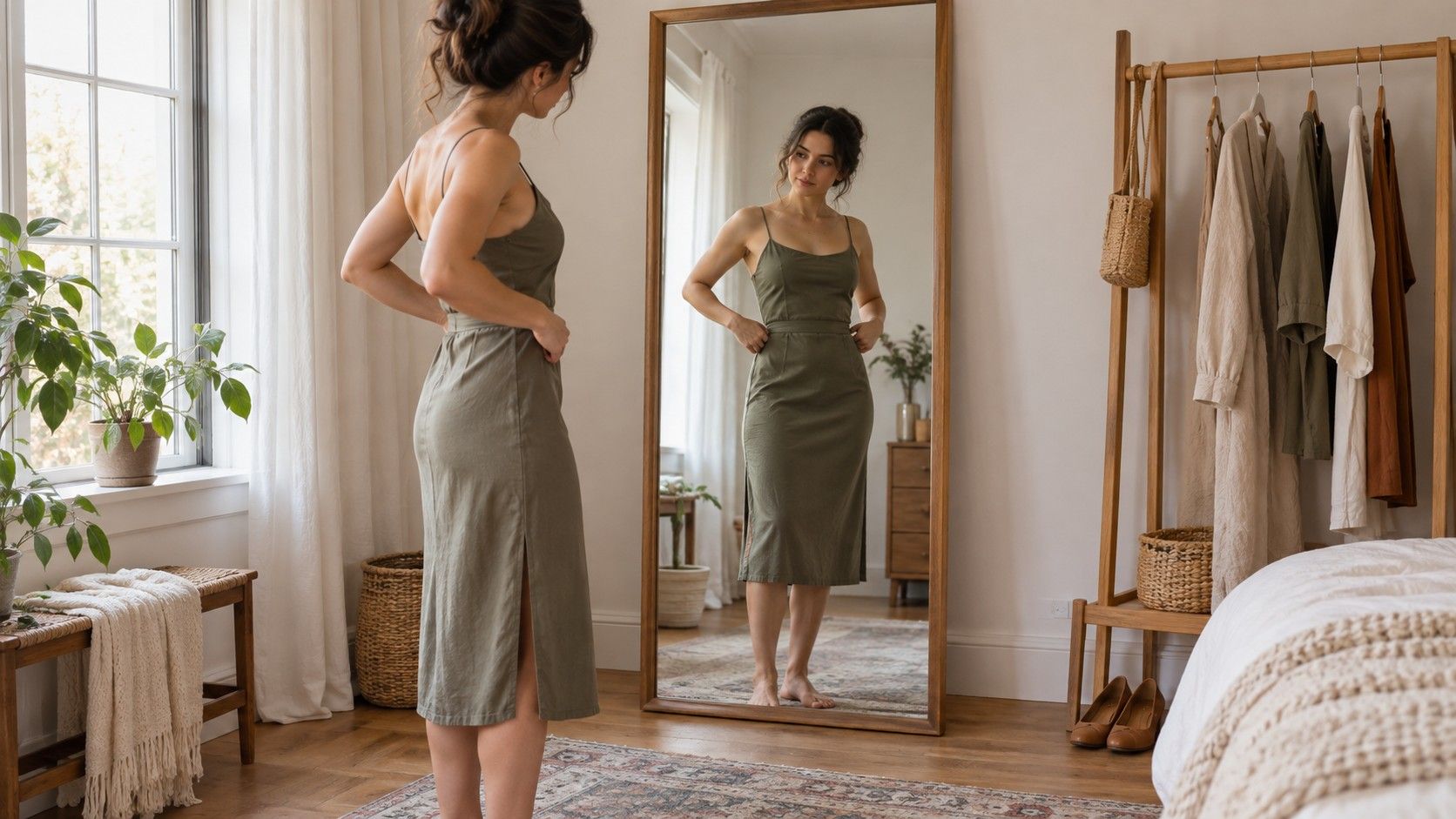
A mirror at home gives a more honest answer than a tightly framed fitting-room mirror. Put on the trousers and shoes you would genuinely wear with the blazer, then stand far enough back to see from head to foot. Check the hem against three personal landmarks: your natural waist, the upper curve of the hip and the fullest part of the seat. A hem that stops exactly at a prominent point can look abrupt in one fabric but completely calm in another. Soft wool tends to settle; a stiff double-breasted jacket draws a sharper horizontal line.
Torso length also changes the impression. A blazer for a short torso does not have to be cropped, but a shorter hem can leave more of the trouser visible and keep the outfit from feeling jacket-heavy. With a longer torso, a low-hip hem may feel comfortably in scale, while a very short jacket can make the upper section seem suddenly cut off. These are visual effects, not corrections. If you enjoy the contrast, it is doing its job.
Photograph two lengths from the same distance and camera height. Phone pictures taken from waist level distort the comparison, so place the lens around chest height and use the same stance. Look at the relationship among the hem, waistband and leg line before focusing on your body. This simple test is much more useful than searching for a universal blazer length for body shape.
Shoulders first: the fit detail you cannot ignore
Length is easy to alter compared with a complicated shoulder, so assess shoulder fit before debating the hem. The shoulder seam should sit near the intended edge of the jacket. On an unstructured blazer that edge may be soft and slightly dropped. On a tailored style with a shoulder pad, the line is deliberately firmer. What matters is that both sides look deliberate and that the sleeve hangs without deep diagonal pulling.
Run a hand over the top of the sleeve. A hollow below the pad, a dent at the sleeve head or a ridge extending beyond your shoulder can mean the jacket and your shoulder are asking for different shapes. Minor sleeve-head adjustments are possible, but rebuilding the shoulder is rarely a simple alteration. If two blazers have similar length, the one with the cleaner shoulder usually gives you more ways to style it.
Next, wear the layer you expect to put underneath. A blazer that sits smoothly over a thin camisole may grip across the upper arm when you add a cotton shirt. Cross your arms, reach forward as if picking up a bag, and lift each arm to shoulder height. Some resistance is normal in tailored cloth, but the jacket should not drag the neckline backward or force the shoulder pad upward. Layering ease is part of how a blazer should fit, not an optional extra.
Sleeve length affects the same vertical balance. A full-length sleeve usually ends near the wrist bone, while a bracelet sleeve exposes more forearm and can make a long jacket feel lighter. Before shortening anything, bend your elbows and check the reach. A sleeve that looks immaculate with straight arms may become annoyingly short at a desk.
Button stance and the visual waist
The button stance is the height of the main fastening point. On a one-button jacket it is obvious; on a two-button blazer, the upper button usually sets the visual centre. When that point sits close to your natural waist, the jacket tends to follow the torso smoothly. A lower stance opens a longer V through the lapels and creates a lower focal point. A higher stance shortens that opening and may give the front a more compact look.
This detail explains why two jackets with identical hems can feel unrelated. A longer blazer with a well-placed button may look balanced, while a shorter one with a low button can seem to pull the whole front downward. Fasten the blazer and look for radiating creases from the button. A small amount of shaping is expected, but strong X-shaped tension suggests that the front is too tight or the button is sitting where the garment cannot close comfortably.
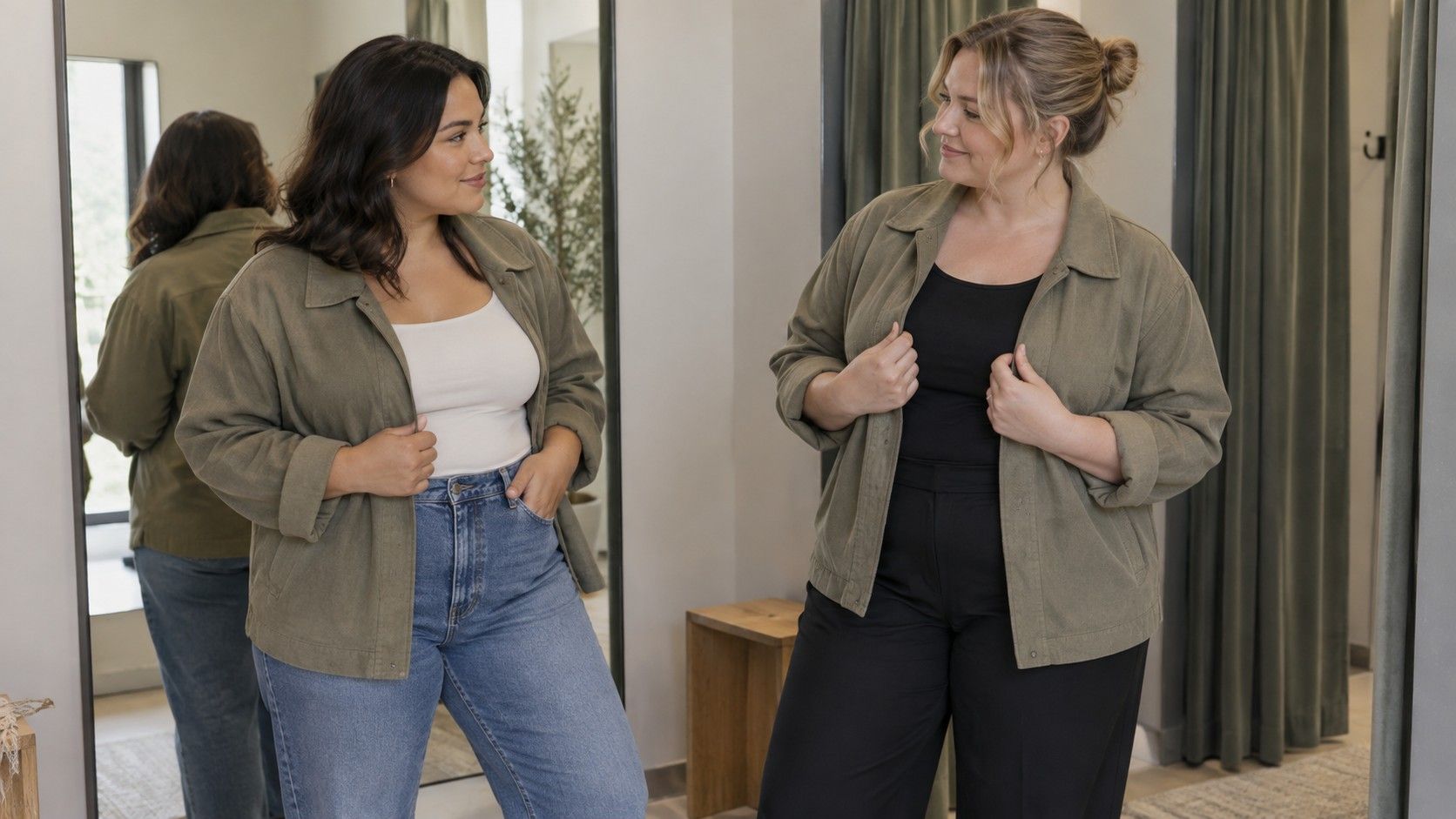
Then unbutton it. Many people wear a blazer open most of the day, and lapels that behave beautifully when closed can flare away from the chest when open. The collar should remain reasonably close to the back of the neck, without a deep gap. Check whether the lapel edge hangs cleanly or curls because the fabric is strained. Bust shape, posture and the cut of the front panel all affect this; it is not simply a matter of choosing a larger size.
For a long torso, a higher button stance can bring the visual waist upward, while a lower stance may emphasise the torso length. With a short torso, a lower button can create more open space above the waist, though it may also land below the point where the jacket wants to shape. Treat these effects as options. The right choice depends on whether you want continuity, contrast or room for a particular top underneath.
Pairing a blazer with different trouser rises
A blazer does not have one fixed proportion once it enters a wardrobe. High-rise trousers place the waistband closer to the blazer button and reduce the visible gap between top and bottom. Mid-rise trousers leave a little more torso visible. A lower rise creates the longest space between the waistband and the jacket opening, especially when the blazer is worn open.
| Trouser rise | What to check with the blazer | Possible effect |
|---|---|---|
| High rise | Does the waistband sit comfortably under the button and front shaping? | A continuous waist area, particularly with cropped or hip-length jackets |
| Mid rise | Is the top visible in a deliberate band rather than an accidental sliver? | A flexible division that works with many classic blazer lengths |
| Lower rise | Does the open front expose more torso than you want during movement? | A longer upper-body line, often strongest with a longline jacket |
Try the same blazer with two rises before deciding that its length is wrong. A blazer for a long torso may feel perfectly balanced with mid-rise jeans but overly elongated with low-rise trousers. A blazer for a short torso can feel cramped over a very high waistband, then relaxed when the waistband drops a few centimetres. The difference comes from the space between clothing lines, not from a verdict about your figure.
Pay attention to bulk as well. A long shirt tucked into high-rise trousers adds fabric exactly where a fitted blazer narrows. If the front will not lie smoothly, test a finer layer before sizing up. Conversely, if the jacket is meant to sit over knitwear, a small amount of extra ease may look better and feel more useful than a sharply fitted waist.
Testing length while sitting and moving
The final test happens away from the mirror. Sit in a firm chair, then in a softer seat. A long blazer may bunch above the hips or pull at the button when you sit. An unvented back can ride up, while a single or double vent usually gives the hem somewhere to go. If you expect to commute, work at a desk or drive in the jacket, these reactions matter more than a perfect standing photograph.
Leave the blazer fastened for a moment and take a normal breath. The front should not feel like a belt around the ribs. Then unfasten it, stand, reach for a coat or shoulder bag, and walk several steps. Watch whether the jacket settles back into place. Constantly tugging the hem down is a sign that the cut, lining or hip ease may be fighting your movement.
Carry your usual bag during the test. A crossbody strap can crush a structured lapel, and a shoulder bag can pull one side of a softly tailored jacket upward. This does not make the blazer unusable, but it may change which one you reach for on a workday. Pockets deserve the same realism: put your phone in one and see whether the weight distorts the hem.
Only after these checks should you consider alterations. Sleeve shortening and modest waist suppression are common. Changing the total length can disturb pocket placement, vents and the proportion between the hem and button, so ask a tailor what will remain after the cut. A blazer earns its place when it works with several real outfits and recovers after ordinary movement. The mirror can suggest a line; a full day tells you whether that line is livable.