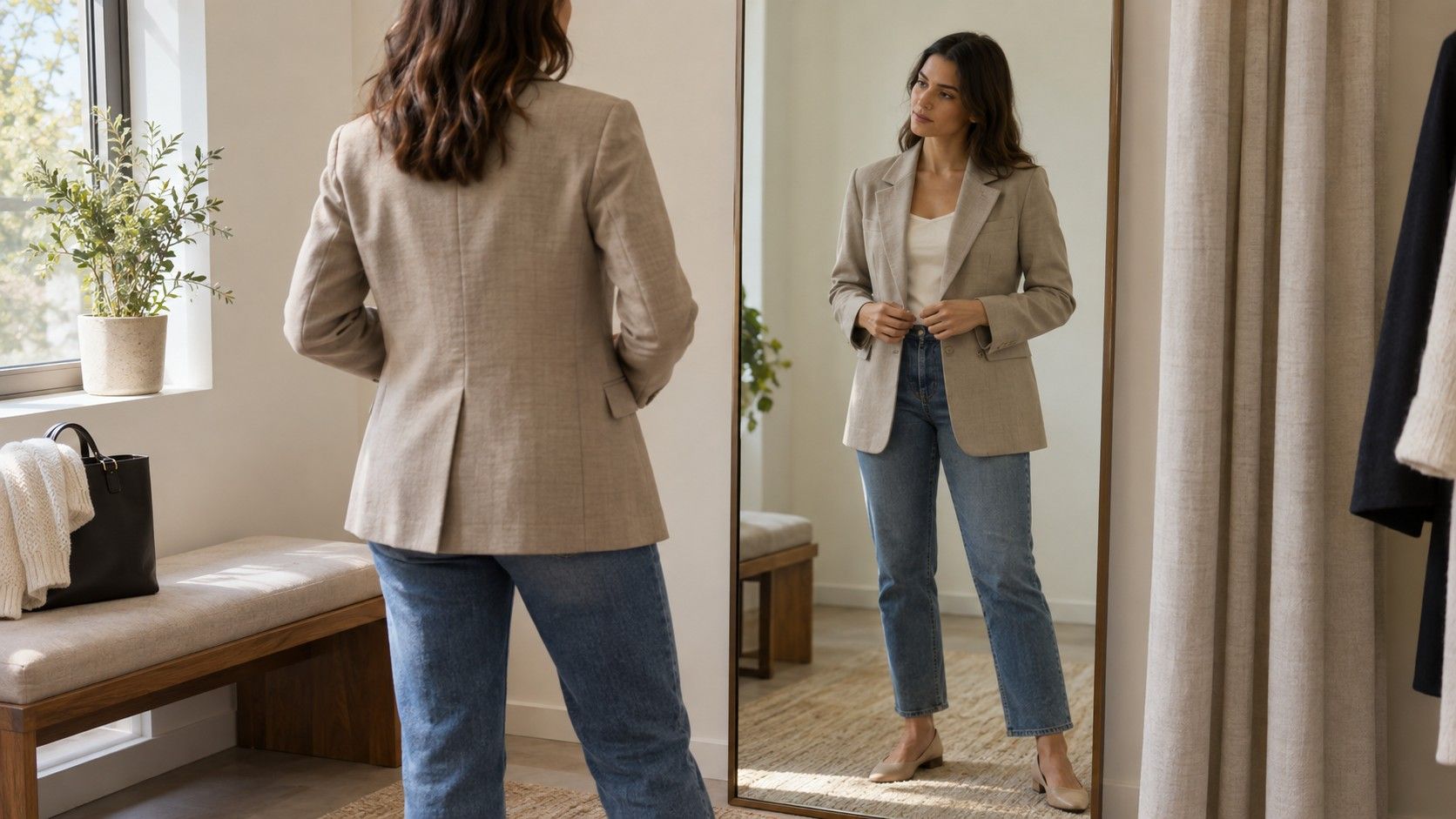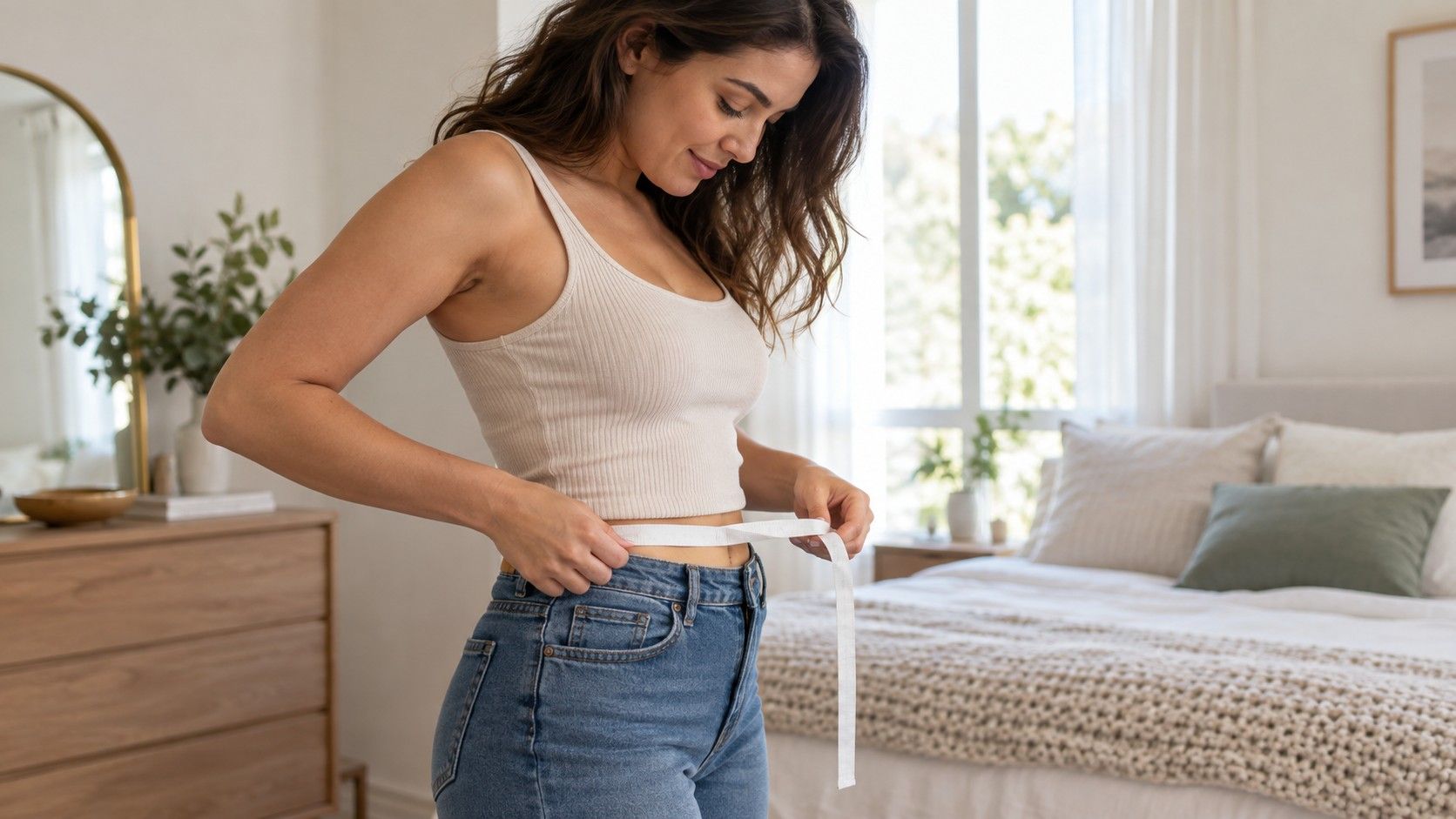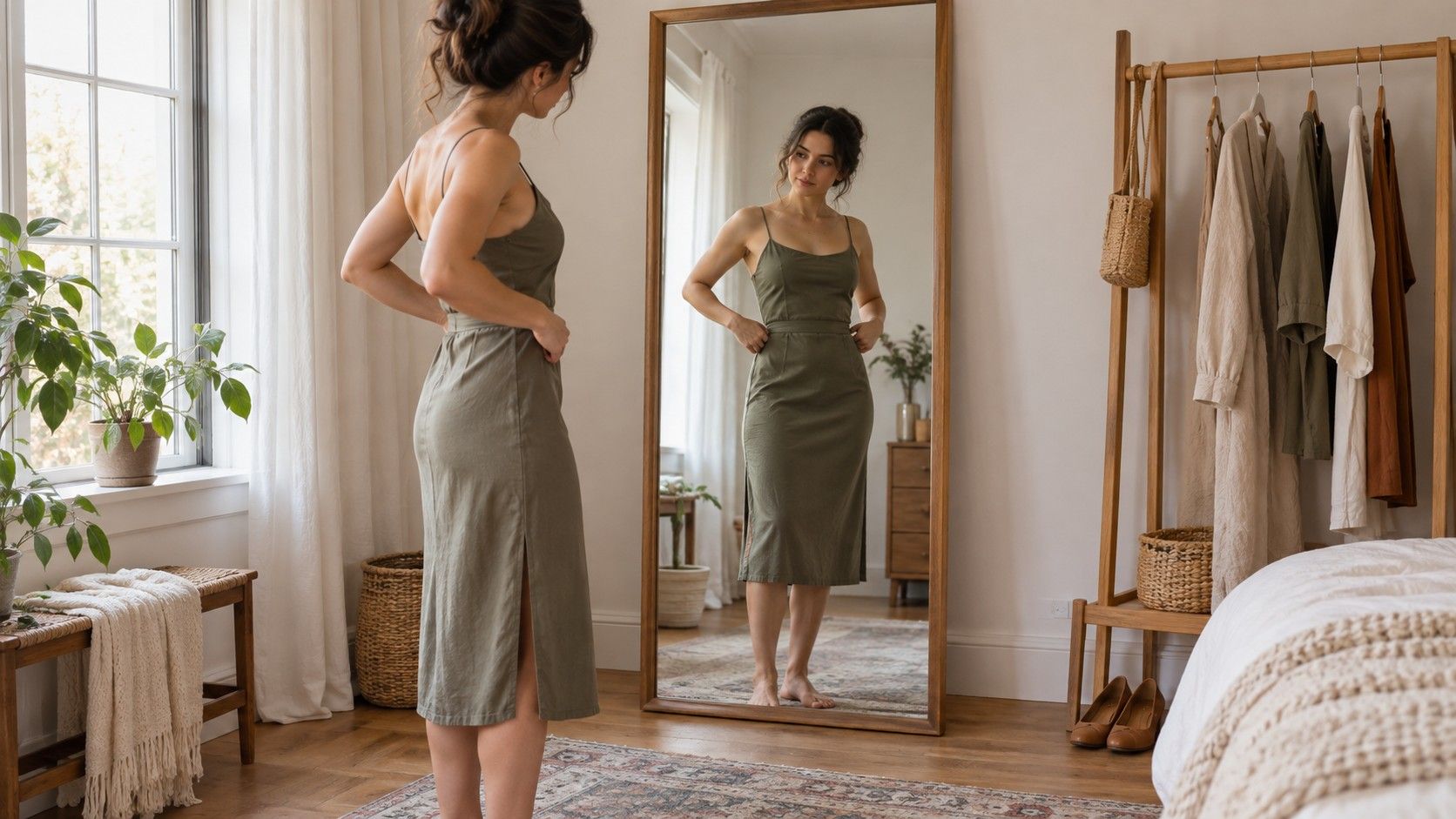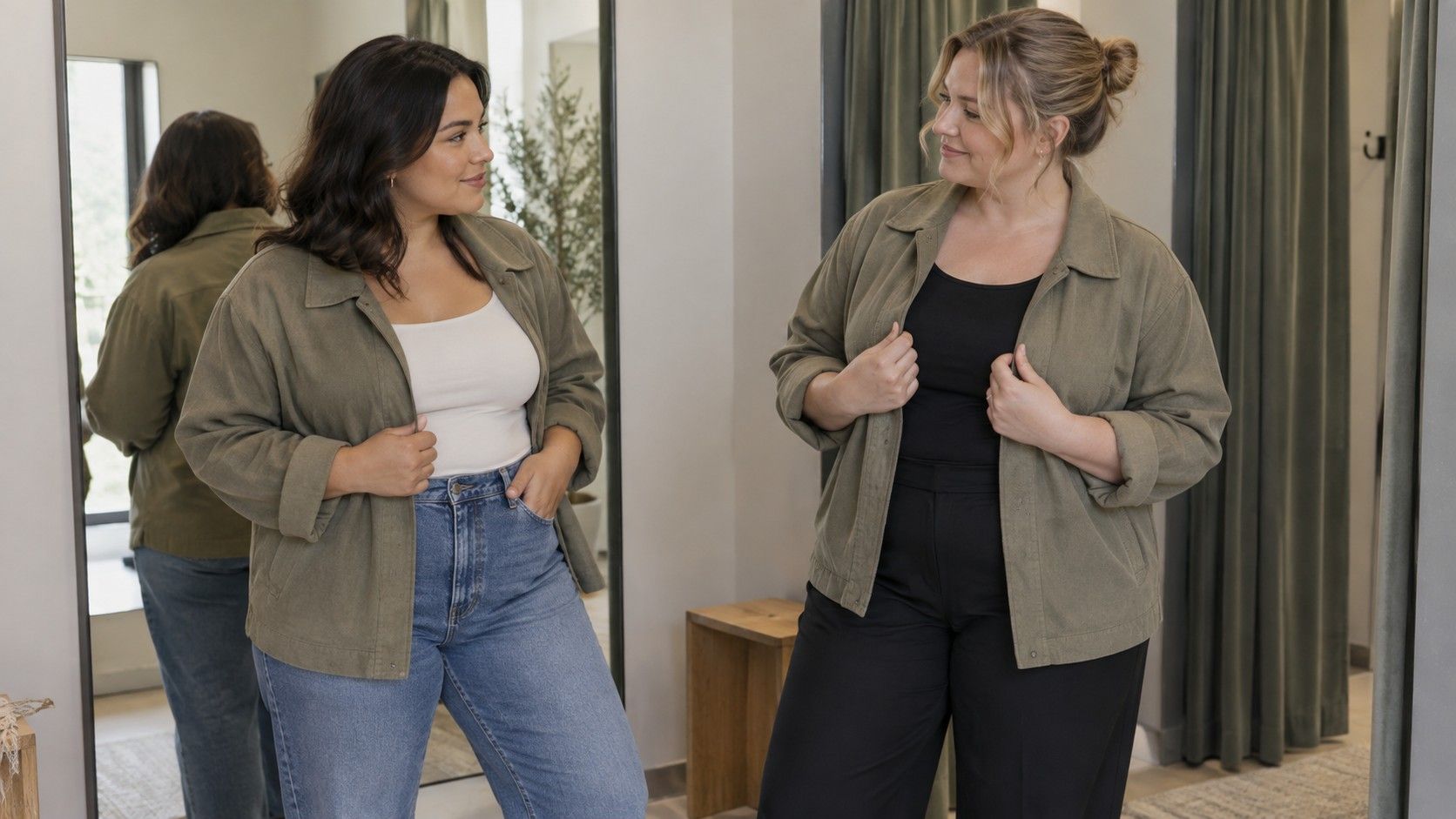
A body shape quiz can be useful without delivering one permanent answer. If your measurements sit close to two categories, or the result changes when you retake the quiz, the sensible response is not to measure harder until one label wins. Treat both results as clues about proportion, then test those clues against the way real clothes sit, move, and feel. A mixed body shape is not an error to solve; it is often a more accurate description of a body that does not match a simplified diagram.
Why two quiz results can both be plausible
Most quizzes reduce several measurements to a few ratios. Shoulders may be compared with hips, while the waist is judged by how much narrower it is than one or both. A difference of one or two centimeters can move an answer across a category boundary even though it makes little practical difference in a fitting room. Close ratios are especially common when your shoulder and hip measurements are similar or when the waist falls near the cutoff used by the quiz.
Different quizzes also define the categories differently. One may use the fullest bust measurement as a stand-in for the upper body, while another asks for shoulder circumference or a straight width across the back. Those are not interchangeable measurements. Bust volume, ribcage width, bra fit, and shoulder structure can produce different numbers without any of them being wrong. This is why a body shape quiz confusing you may say more about the quiz method than about your measuring technique.
Posture changes the picture too. A relaxed stance, a slightly tilted pelvis, or shoulders held forward can affect both the tape and the outline you see in a mirror. Clothing adds another layer: a padded bra, compressive leggings, or a thick sweater changes the visible balance. When two results remain plausible, keep both in play and look for the shared fit questions. You may need room through the hip and careful shoulder placement, for example, without needing a single category name to justify either choice.
Measure a range, not one supposedly perfect number
Measurements vary through an ordinary day. A tape taken after breakfast may not match one taken first thing in the morning. Menstrual-cycle changes, digestion, hydration, training, medication, and seasonal weight shifts can alter the waist or hip measurement temporarily. Even the pressure of the tape matters: pulling until it dents the skin produces a different result from laying it level and snug. False precision makes these normal differences look more meaningful than they are.
Take each measurement twice on the same occasion and repeat the set on a second day. Wear the same light base layer, stand naturally, and keep the tape parallel to the floor. For shoulders, decide whether the quiz wants circumference or straight width and follow that exact method. For hips, move the tape slightly up and down until it passes over the fullest point of the seat. Record a small range, such as 79–81 cm, rather than choosing the neatest number.
Bra fit deserves its own note because it changes where clothing meets the upper torso. A band that rides up or cups that shift the bust outward can affect both a bust measurement and the way a dress or jacket hangs. Measure in the bra you normally wear under the clothing you are evaluating. If you regularly switch between a soft bralette and a structured bra, it may be useful to record both. Neither result is the true version; each describes a different dressing situation.
Seasonal size changes are another reason to keep ranges. The jeans that fit closely in winter may feel different during a hot week, and a body can change over months without changing its general proportions. Update your notes when clothing starts behaving differently, not according to a rigid calendar. The goal is to understand current fit, not to defend an old quiz result.
Notice what fabric and garment cut are doing
A quiz describes the body, but an outfit shows the interaction between body, fabric, and cut. A crisp cotton shirt keeps much of its own shape; a fluid knit follows the torso more closely. Two tops with identical chest measurements can create different proportions if one has dropped shoulders and the other has a narrow set-in sleeve. Before deciding that advice for one category has failed, check whether the garment itself is introducing width, structure, or volume.
Seam placement gives useful evidence. A shoulder seam that falls past the shoulder point may make the upper body look broader, while a sleeve head that pulls inward suggests the garment needs more room or a different shoulder shape. At the hip, diagonal drag lines, pockets that flare, or a hem that lifts at the back point to a cut issue. These observations are more actionable than deciding that your upper or lower half belongs to a named shape.
Stretch fabric can temporarily hide a mismatch in the pattern. It may accommodate the hip while leaving the waistband loose, or fit the bust while pulling a waist seam upward. That does not mean stretch is unsuitable; it means the garment is borrowing ease from the fabric. Check how it feels after sitting for twenty minutes and whether it returns to shape. A stable woven fabric reveals pattern proportions quickly, while a soft jersey may prioritize movement and comfort. Both can work for the same person for different reasons.
Borrow from both categories, one fit question at a time
If you are between body shapes, do not merge two complete lists of supposed rules. Separate the advice into individual experiments. One category may offer helpful ideas about trouser waist-to-hip proportion; the other may better explain jacket shoulders or neckline scale. Keep advice that solves a problem you actually have and ignore guidance aimed at a problem that never appears in your clothes.
| What you notice | Useful experiment | What to check |
|---|---|---|
| Waistbands gap while hips fit | Try a contoured waistband or curvier cut | Comfort when sitting and no pulling at pockets |
| Jackets fit the body but strain at the shoulder | Compare a roomier shoulder or raglan sleeve | Arm movement without excess fabric at the torso |
| Waist definition changes by outfit | Move a belt or waist seam slightly up and down | Whether the garment stays in place while walking |
| Straight cuts feel good but look different by fabric | Compare a structured woven with a fluid knit | Drape, cling, and the amount of ease you prefer |
The table is a menu of tests, not a ranking of bodies or silhouettes. You might like a clear waist in dresses and prefer an unshaped jacket. You might want close-fitting jeans for evenings but loose trousers for a workday spent sitting. Fit preference includes sensory comfort, movement, personal style, and context. A recommendation is useful only when it supports those priorities.
Be wary of advice framed as correction. You do not need to create an hourglass, conceal a hip, or make shoulders appear smaller to dress well. Visual balance is one possible styling goal, not a duty. Other valid goals include showing the line of an oversized coat, emphasizing strong shoulders, keeping fabric away from the stomach, or wearing a favorite color in the largest area of an outfit.
Keep outfit notes that reveal patterns over time
A short record of real outfits is more informative than repeatedly taking the same quiz. Photograph the front, side, and back in consistent light, then add two or three notes: where the garment pulls, where it has excess fabric, and how it feels after movement. Include the size, fabric composition, and any useful construction detail such as a contoured waistband, stretch percentage, shoulder pad, or wrap closure.
Test movement rather than judging only a still mirror view. Sit in trousers, reach forward in a jacket, climb a step in a skirt, and raise both arms in a dress. Notice whether seams return to position afterward. A garment that looks precise for thirty seconds but needs constant adjustment may be less successful than one whose silhouette is less textbook-perfect but remains comfortable through the day.
After five or six outfits, look for repeated fit signals. Perhaps higher rises stay in place, shoulder seams need more room, or soft fabrics feel better when they have a little extra ease. These are personal findings that can guide online size charts, tailoring decisions, and fitting-room choices. They remain useful even if your measurements change or a quiz uses unfamiliar category names.
When someone asks, ‘What if I have two body shapes?’ the most honest answer is that you can use both without turning either into an identity. Your proportions are specific, clothing patterns vary, and preferences matter. Let a label suggest the next garment detail to test, then let comfort, movement, and the actual fit decide whether that suggestion belongs in your wardrobe.