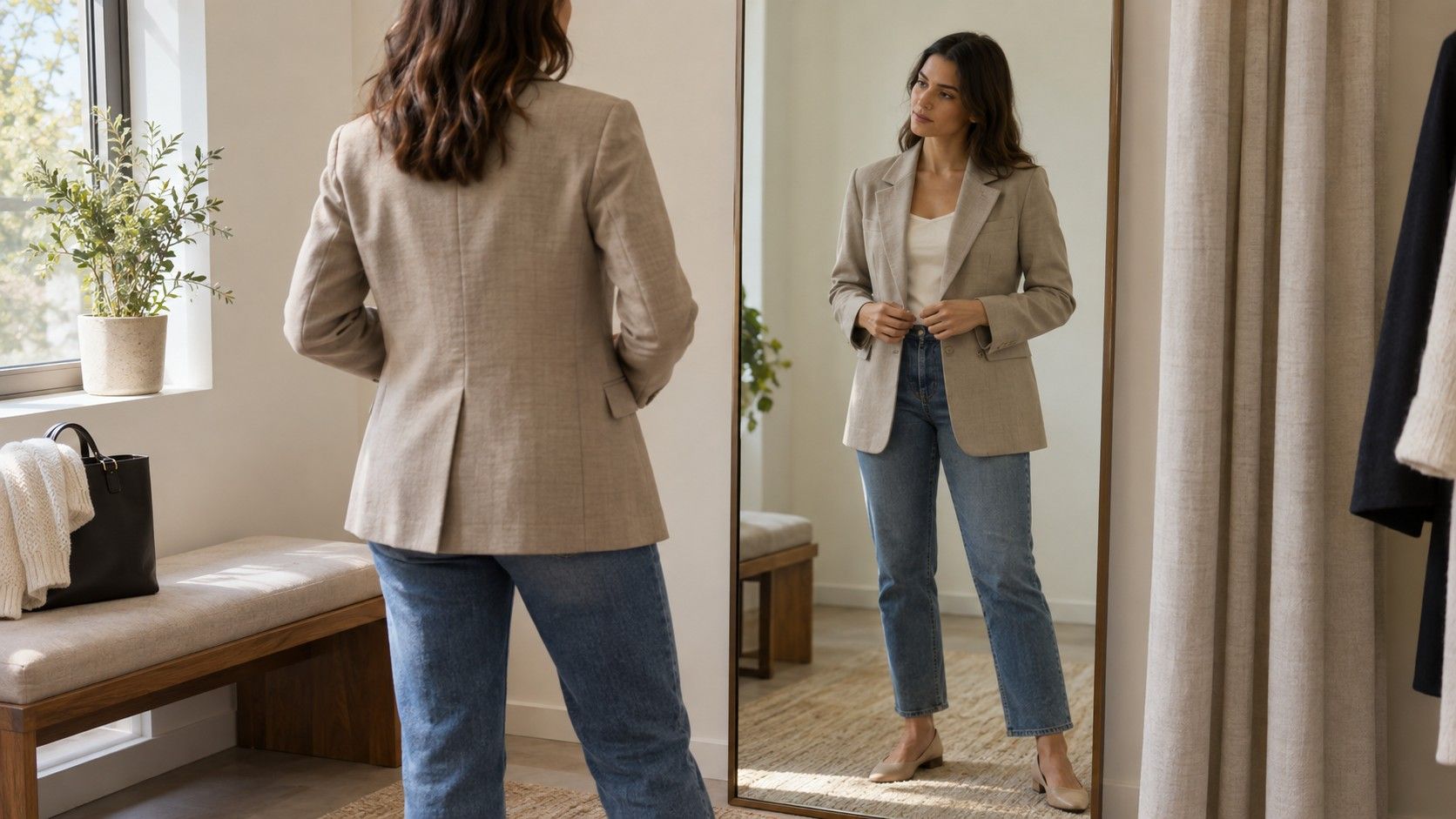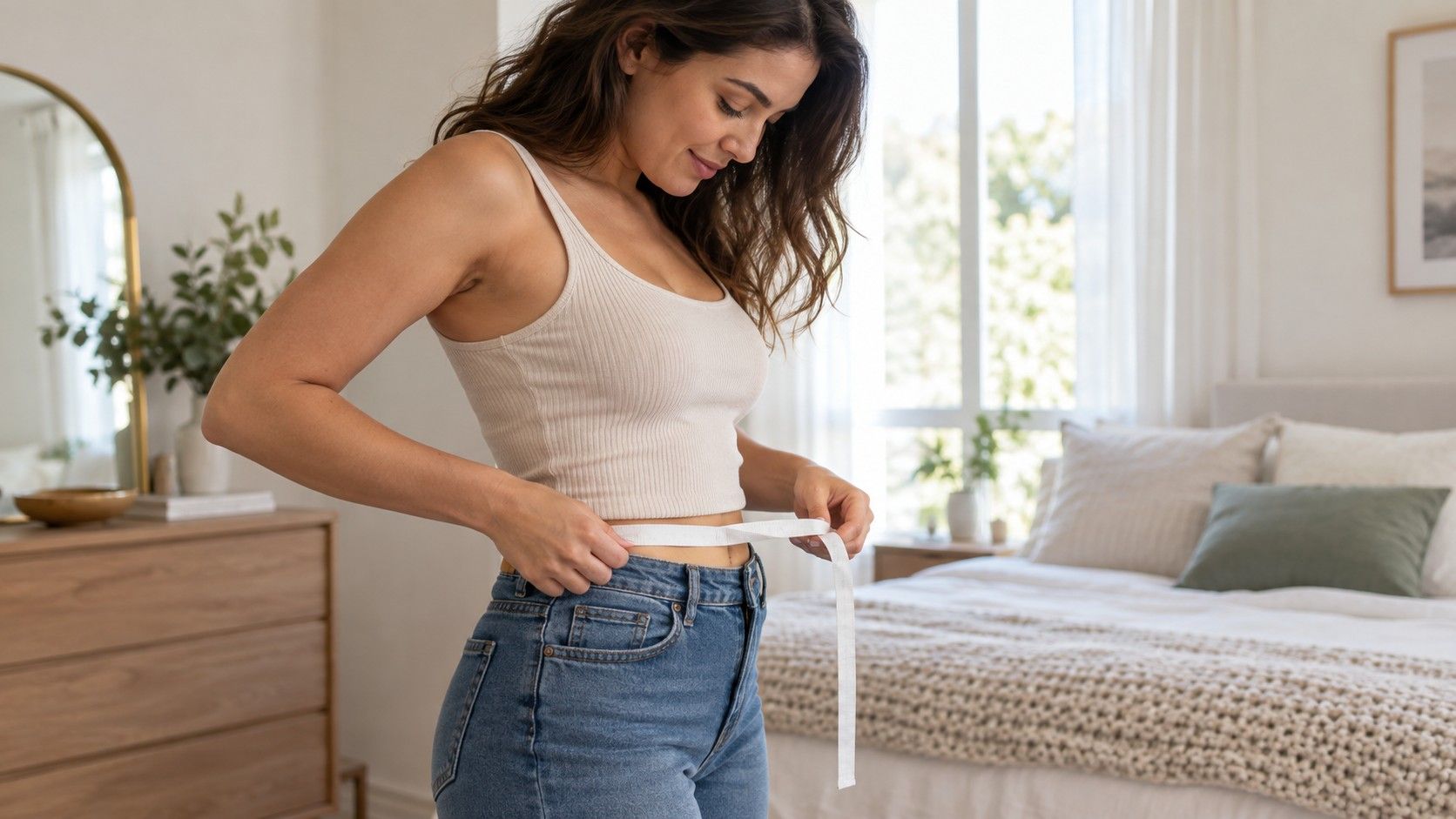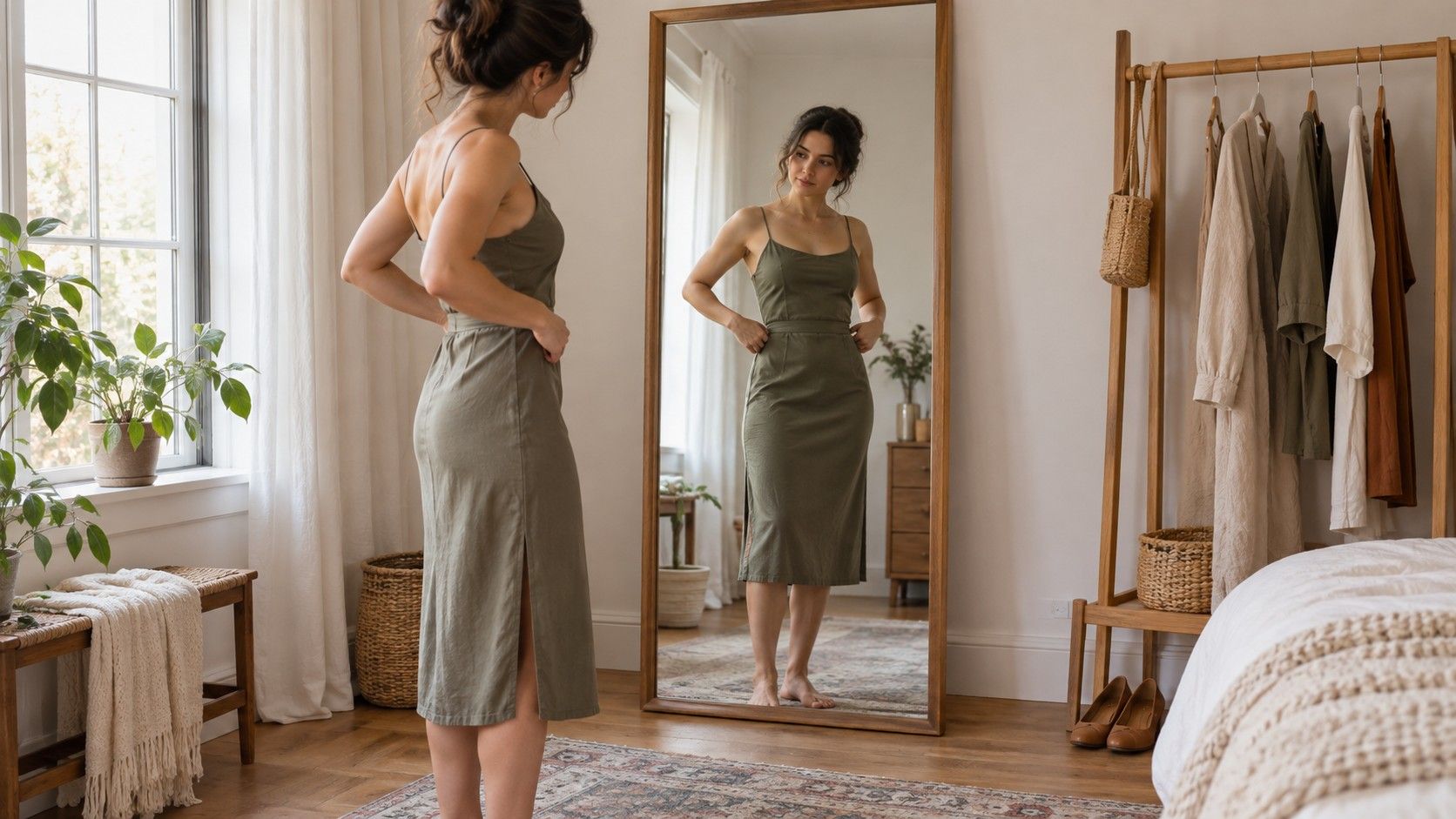
Body shape style rules can be useful when they give you a new styling experiment, but they become limiting when they present one visual preference as the only acceptable result. “Add volume here,” “hide that area,” and “never wear this cut” sound decisive, which is part of their appeal. Yet clothing has more jobs than creating an approved outline. It has to move, suit the occasion, work with the weather, and feel recognisably yours. A rule deserves attention only after it survives those ordinary tests.
Why body-shape rules became so persuasive
Most familiar rules come from a narrow design goal: make the clothed figure appear closer to a balanced or hourglass proportion. That can be a valid aesthetic choice, just as an elongated, straight, oversized, or sculptural silhouette can be. The problem begins when the goal is left unstated. Advice to widen the shoulders or define the waist then sounds like a fact about the body rather than one route to one look.
Categories also make a complicated fitting problem feel manageable. If your shoulder, waist, and hip measurements suggest a triangle or rectangle, a short list promises to filter an entire shop. It may point you toward a neckline or jacket shape you had not considered, which is genuinely helpful. It cannot account for torso length, bust projection, shoulder slope, rise preference, posture, fabric behaviour, or sensory comfort. Two people with the same outline measurements may need completely different jackets because one needs more upper-arm room and the other needs a shorter back length.
The language around what not to wear by body shape survives because prohibitions are easy to remember. They also avoid the uncertainty of trying something on. But “avoid wide-leg trousers” does not say whether the concern is hem width, rise, fabric stiffness, pocket placement, or the top worn with them. Once the advice is broken into garment details, it usually stops being universal. A fluid wide leg and a rigid barrel leg do not produce the same line or the same experience in motion.
Turn restrictions into experiments
A useful styling suggestion has a reason, a variable, and an alternative. For example: “If you want more waist emphasis, compare a jacket that ends near the waist with one that ends at the hip.” You can test that without agreeing that your waist must be emphasised. An absolute restriction has no such flexibility. “Your shape cannot wear long jackets” closes the question before length, stance, footwear, and preference have been examined.
Translate any body type fashion rules into an A/B test. Keep most of the outfit the same and change one feature: tuck versus untucked, narrow versus wide belt, open versus closed jacket, soft versus crisp fabric, low-contrast versus high-contrast shoes. Wear both versions for a few minutes and take the same front, side, and seated view. The purpose is not to identify the objectively flattering winner. It is to notice what changes and decide whether you value that change.
| Rule you hear | What it is trying to change | A fairer test |
|---|---|---|
| Always define the waist | Creates a more indented middle | Compare defined, softly suggested, and straight silhouettes |
| Avoid horizontal stripes | Reduces apparent width | Change stripe scale, contrast, fabric, and garment fit separately |
| Never wear oversized clothes | Keeps the outline visible | Try one roomy piece with deliberate shoulder and hem placement |
| Balance the hips with the shoulders | Moves toward an hourglass outline | Compare balanced volume with an intentionally hip-led silhouette |
An experiment can end with “I dislike this,” and that is useful. The difference is ownership. You know whether the dropped shoulder felt cumbersome, whether the high neckline made you restless, or whether a straight dress gave you the clean line you wanted. The conclusion belongs to your taste and comfort threshold, not to anxiety that you have worn the wrong garment for your category.
Use visual balance when it serves the outfit
Visual balance is a design tool, not a duty. It describes how colour, volume, length, detail, and empty space distribute attention. A fuller sleeve can echo a wide skirt; a dark column can make a bright jacket the focus; a substantial shoe can ground a long trouser. These choices may make an outfit feel resolved, but resolved does not always mean symmetrical. A single bright shoulder detail, an uneven hem, or a deliberately oversized coat can create tension that makes the outfit interesting.
Balance is often helpful in occasion dressing because a clear visual structure reads well across a room and in photographs. A defined waist with a full skirt may fit the mood of a formal event; a long monochrome line may suit a restrained work setting. Still, the room matters. A tightly belted dress that looks polished during a five-minute fitting may cross your comfort threshold during a seated dinner. A dramatic sleeve may be delightful at a gallery opening and awkward under a winter coat. The best-looking version on an isolated mirror test is not automatically the best outfit for the whole event.
Body shape myths tend to treat fabric as a passive surface, though it changes nearly every recommendation. Thick ponte holds a different outline from fine jersey. Crisp poplin stands away from the body; washed silk falls toward it. A peplum cut in stiff fabric projects, while the same seam in a soft knit may barely register. If a recommended silhouette feels wrong, the issue may be weight, drape, lining, or seam placement rather than the entire garment category.
Test a supposed rule with clothes you already own
Choose one rule that has removed a whole category from consideration: perhaps no cropped tops, no pleated skirts, no high necklines, or no oversized shirts. Shop your own wardrobe for the nearest versions. You do not need a perfect match. A shirt can be folded under to test a shorter length; a jacket can be belted temporarily; sleeves can be pushed up; a skirt can sit at two different points on the waist. The aim is to isolate the feature before spending money on a theory.
Build three versions. First, follow the rule as usually stated. Second, break it plainly. Third, adjust the surrounding outfit without hiding the tested feature. A cropped boxy top might feel disconnected over one low-rise bottom but deliberate with a higher rise and visible waistband. A pleated skirt might feel bulky with a long heavy sweater yet easy with a shorter knit. The result is not proof that everyone can or should wear the item. It shows which relationships matter to you.
Check the outfit beyond a still front view. Sit down, bend, reach, walk outside, and look at it under ordinary lighting. Notice whether you keep pulling at the hem or forget about the garment. Clothing comfort includes pressure, temperature, range of movement, fabric texture, and the amount of attention an outfit demands from you. A style can look excellent and still be unsuitable for a ten-hour workday. It can also be worth that effort for a two-hour celebration. Context prevents a comfort preference from turning into another universal prohibition.
If you use photographs, compare the clothing rather than scanning your body for faults. Look at whether the lapel breaks, the hem catches, the pocket gapes, or the intended focal point is visible. Ask, “Does this create the effect I wanted?” rather than, “Does this make me look smaller?” Size reduction is only one possible visual goal, and often not the relevant one.
Build a style vocabulary that leaves room for change
Replace verdicts with specific preferences. “I look bad in crew necks” might become “I prefer an open neckline when I am wearing a dark, close-fitting top, but I like crew necks in pale knits under jackets.” “I cannot wear midi skirts” might become “I like midi hems with a visible ankle and a shoe that has some structure.” Specific language expands options because it identifies conditions rather than condemning a category.
Your vocabulary can include emotional and practical words as well as visual ones: grounded, sharp, relaxed, protected, playful, low-maintenance, airy, contained. These terms help when two outfits are equally balanced but only one feels right. They also explain why personal style may change across settings. The same person may want authority in a meeting, ease on a train, and exuberance at dinner. No single outline has to perform every role.
Keep a small record of successful combinations, especially the unexpected ones. Note the garment details that made them work: a shoulder seam in the right place, enough room to layer, a hem that met a preferred rise, or a fabric with movement. Over time, those observations become more dependable than a body-shape label. They guide purchases and alterations without pretending that taste is permanent.
Questioning rules does not require rejecting all advice. It means restoring the missing choice. You may test waist emphasis and love it, use shoulder detail because you enjoy a balanced line, or avoid a fabric because it distracts you all day. The useful distinction is between “this creates an effect I prefer” and “people with my body must do this.” The first supports personal style. The second shrinks it.