A body-shape result can offer a useful vocabulary for comparing shoulder, waist, and hip width. It cannot explain every fitting-room surprise. Torso length, rise, shoulder slope, and the amount of ease in a garment often matter more than the familiar shape label. Using both kinds of information makes shopping more precise without turning your body into a category it must obey.
Know what a shape label describes and what a proportion describes
The body shape vs body proportions distinction is straightforward. A shape label usually compares horizontal measurements or the visible relationship between shoulders, bust, waist, and hips. A proportion compares lengths or placements: torso to legs, shoulder to waist, waist to knee, or front rise to back rise. One person can have the same broad shape label as another while needing entirely different garment lengths.
Terms such as pear, rectangle, hourglass, inverted triangle, and apple are informal styling categories, not sizing standards. Their definitions vary between quizzes. Some use bust, waist, and hip ratios; others use shoulder width rather than bust. That variation is why two quizzes can return different labels from the same measurements without either revealing a precise clothing size.
Proportions are more specific to construction. A short torso changes where a dress waist seam lands. A long rise affects the depth needed between a trouser waistband and crotch. Broad or narrow shoulders influence how a jacket hangs before the fabric reaches the bust. These details can occur within any body-shape category.
Body type vs body shape language is also used inconsistently. Body type may refer to shape, build, size, or an older classification system. For clothing, it is clearer to name the actual relationship you are observing. Saying that a waistband sits above your natural waist or that sleeves are consistently long produces a more useful shopping clue than trying to settle on a perfect label.
Recognize fit issues a body-shape label cannot solve
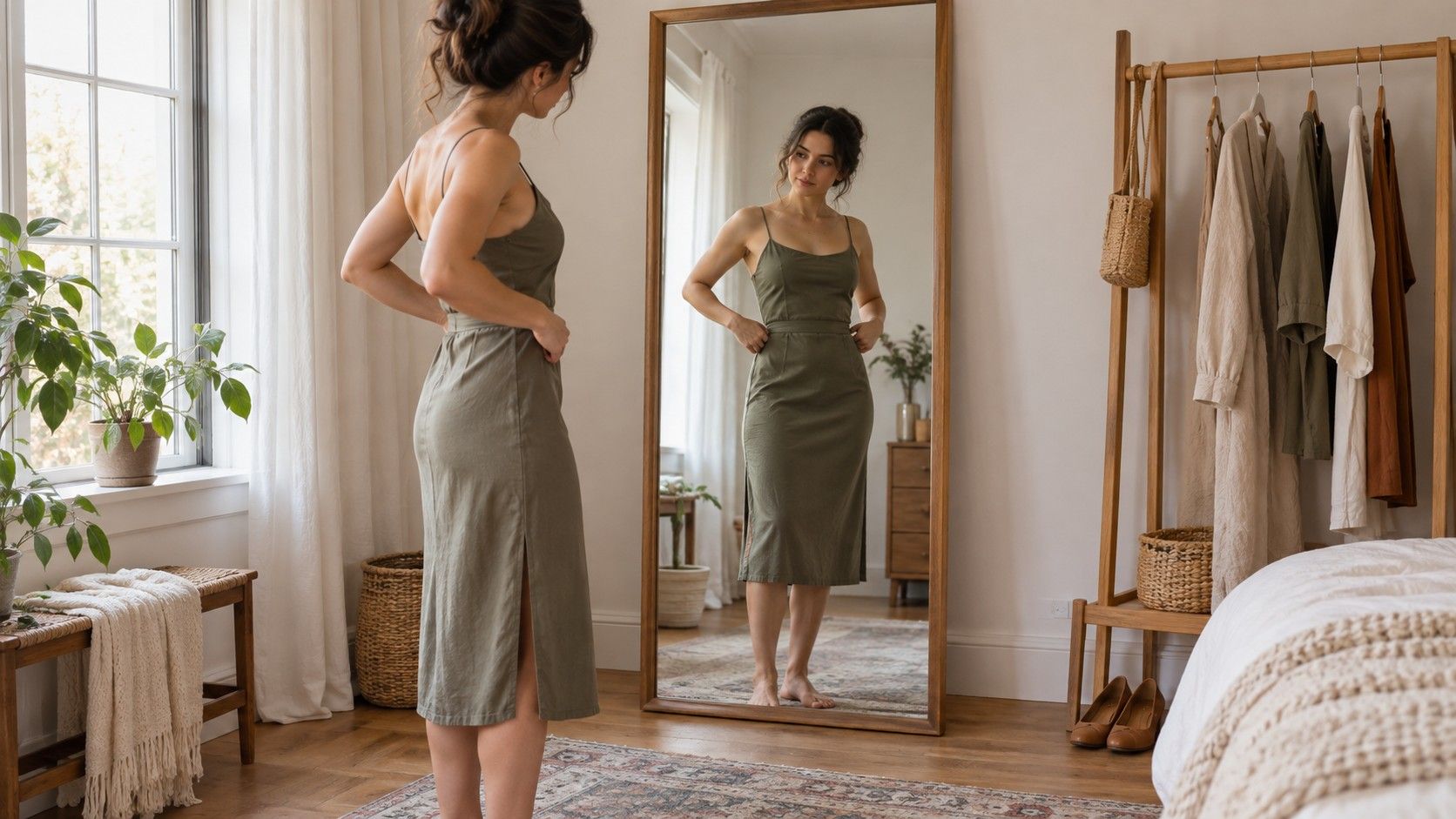
Imagine two shoppers with similar bust, waist, and hip measurements. One has a longer torso and the other has a shorter torso. The same wrap dress may place its tie at the natural waist on the first person and close to the ribs on the second. A clothing fit body shape recommendation might suggest the dress to both, yet only a vertical proportion explains the different result.
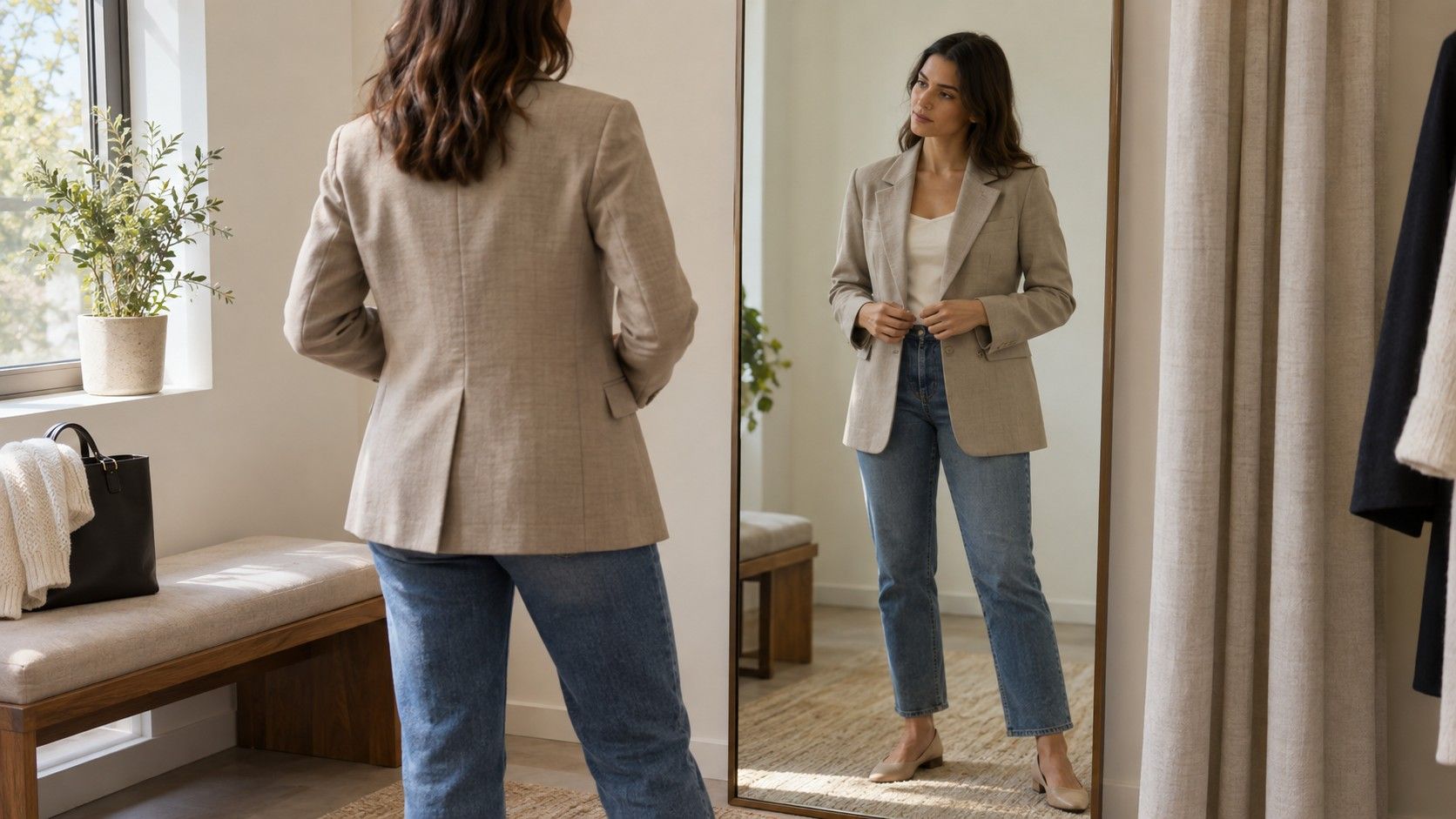
Shoulder slope is another example. A blouse can fit across the bust while forming diagonal folds from neck to armhole because the garment shoulder angle differs from the wearer's. Moving up a size adds width and ease but does not necessarily change the angle in the right way. A shoulder alteration or a different pattern may be more effective.
Trousers reveal the limits of shape labels quickly. Waist and hip circumference help select a starting size, but they do not describe rise, crotch curve, thigh room, or the difference between front and back length. Gaping at the back waist can occur alongside tightness at the front, and a larger size may simply add excess fabric elsewhere.
Ease also changes the experience. Ease is the difference between body measurements and finished garment measurements. A fitted woven shirt needs enough room for breathing and reaching, while an oversized knit intentionally contains much more. Two garments with the same size label can feel completely different because their intended ease and fabric stretch are different.
Keep measurements that help with online shopping
A practical body proportions guide begins with a small set of body and garment measurements. Body measurements help you choose a size-chart range. Measurements from clothes you already like help you judge the cut. The second set is often overlooked, even though it lets you compare a new product with an item whose fit you understand.
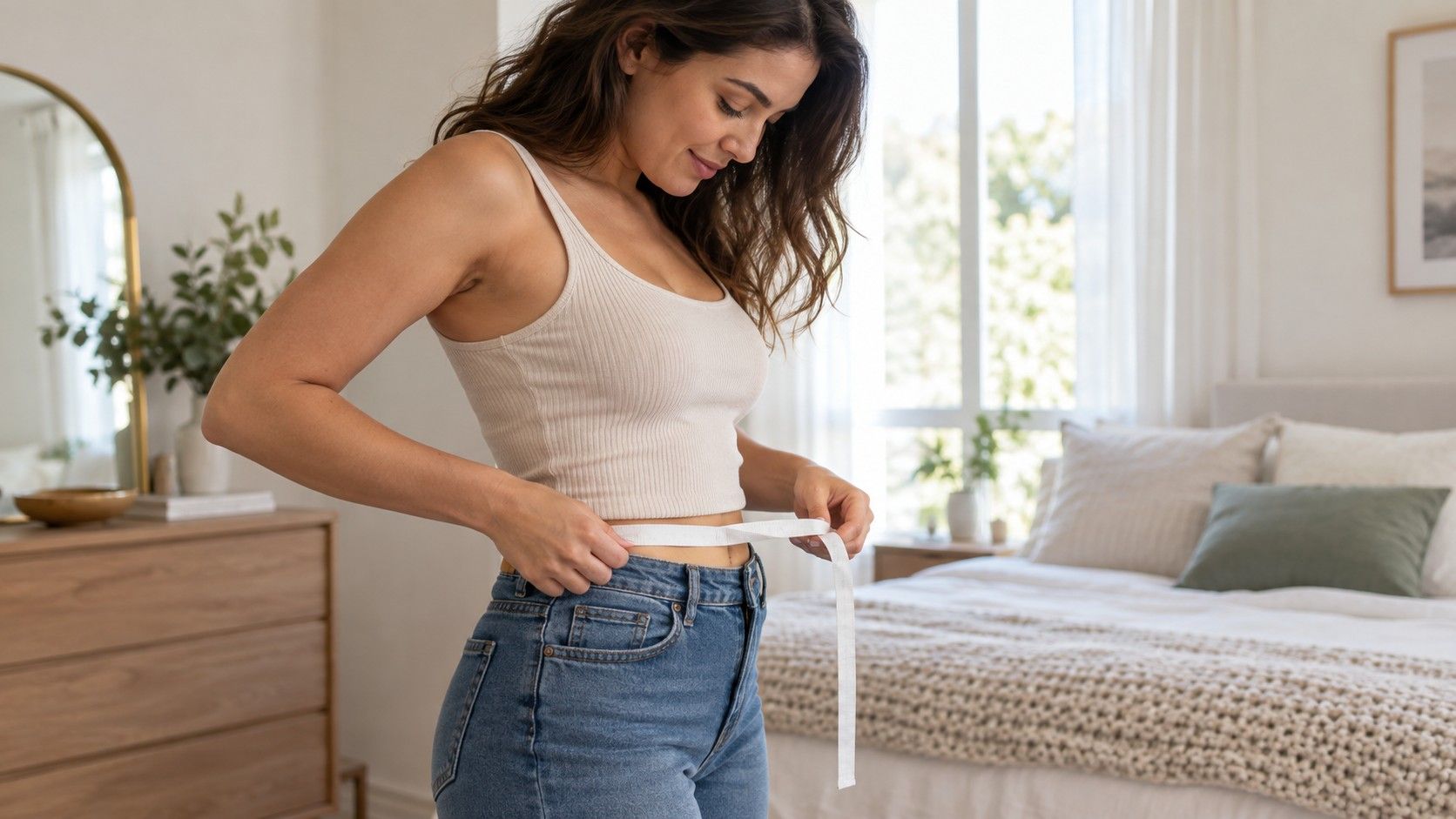
For the body, record shoulder width if the retailer provides it, plus bust or chest, natural waist, high hip, full hip, and inseam. Measure over the undergarments or light layers you usually wear. Keep the tape level and comfortably close rather than pulling it tight. Measurements naturally vary slightly with posture, breathing, and time, so treat them as working ranges.
For garments, measure a favorite shirt flat across the chest from underarm to underarm, then double that number if the retailer lists circumference. Record the shoulder seam, sleeve, and back length. For trousers, note waistband width, front rise, back rise, hip width, thigh, inseam, and leg opening. Compare like with like: a stretchy knit measured relaxed is not equivalent to a rigid woven garment.
Torso length is difficult to compare across retailer charts because brands rarely publish it directly. Garment length and waist-seam placement provide useful proxies. On dresses, measure from the highest shoulder point to the waist seam and from that seam to the hem. On jackets, note the back length and where the button stance falls relative to your waist.
| Shopping question | Most useful information | Why it helps |
|---|---|---|
| Which size should I open first? | Bust, waist, and hip compared with the size chart | Identifies a starting range |
| Will the waist seam land correctly? | Torso length and shoulder-to-waist garment length | Checks vertical placement |
| Will trousers feel deep enough? | Front rise, back rise, and crotch shape | Shows space between waistband and crotch |
| Will a jacket hang cleanly? | Shoulder width, slope, bust ease, and button stance | Explains structure before hem length |
| Can an alteration help? | Location and size of the mismatch | Distinguishes a simple hem from a pattern issue |
Use the size chart before general style advice
A size chart answers a different question from a body-shape guide. The chart estimates which garment size contains enough room at key circumferences. Style advice discusses the visual effect or typical placement of a cut. When buying an actual garment, start with the chart and fabric information because a recommended silhouette cannot compensate for insufficient room to move.
Check whether the chart lists body measurements or finished garment measurements. Body measurements tell you the wearer range a brand designed for. Finished measurements tell you the physical size of the item. Confusing the two can lead to a shirt that is far too tight or much looser than expected. If the page does not say which it uses, compare the numbers with a garment you own and look for product-specific fit notes.
When your measurements span sizes, choose according to the hardest area to alter and the garment's structure. Shoulders and trouser rise are usually more complex than sleeve or hem length. In a fitted woven dress, enough room at the largest relevant measurement may be the best starting point. In a stretchy or loose garment, intended ease can allow more flexibility.
Fabric changes the calculation. Stretch percentage, recovery, lining, seam placement, and cut all affect comfort. A knit may stretch across the bust but still ride up if the torso length is too short. A bias-cut skirt may skim the hips yet grow longer during wear. Read the material and care details alongside the numbers instead of treating the chart as a guarantee.
Decide whether an alteration is realistic
Alterations are most useful when the garment is already sound in the areas that define its structure. Shortening a plain trouser hem, taking in a simple waistband, or adjusting an unlined sleeve can be routine. Moving a jacket shoulder, changing a trouser rise, or relocating an elaborate dress waist seam may require extensive reconstruction and can cost more than finding another cut.
Before buying with alterations in mind, pinch the excess fabric where the change would occur and observe what happens elsewhere. Taking in a waist may alter pocket position or pull a side seam backward. Shortening a flared trouser leg changes the width of the finished opening. Shortening a jacket can disturb pockets, vents, and button spacing.
Patterned fabric adds another constraint because checks, stripes, and large motifs need to remain aligned. Linings and decorative topstitching add labor. If the garment is expensive or intended for frequent wear, asking a tailor for an estimate before the return period ends can prevent an optimistic purchase from becoming an unworn one.
A shape label is not what determines alterability. The location of the mismatch does. A garment that fits shoulders, rise, and the largest circumference may have several reasonable adjustment options. One that twists, pulls from multiple points, or places every seam too high or low is usually based on a pattern that does not match your proportions.
Create a personal fit profile that can evolve
A personal fit profile is a short record of what repeatedly works, not a permanent verdict about your body. Start with current body measurements and the dimensions of one favorite top, trouser, dress, and jacket. Add notes such as prefers room at the waistband when seated, needs a longer front rise, or likes jacket buttons near the natural waist.
Then record garment outcomes rather than judgments about appearance. Useful notes include shoulder seam sits correctly, waist seam is one inch too high, sleeve allows reaching, or back waistband gaps when seated. This language points toward construction and gives you something concrete to compare on the next shopping trip.
Body-shape information can remain part of the profile if it helps you predict width distribution or choose details you enjoy. Proportion notes handle vertical placement, and favorite-garment measurements handle actual scale and ease. Together, these three layers are more informative than any single label.
Update the profile when your comfort preferences, wardrobe, or measurements change. Bodies change, brands revise patterns, and a close fit may appeal in one garment while generous ease works better in another. The aim is not perfect classification. It is fewer unexplained purchases and a clearer reason for keeping the clothes that feel good in motion.