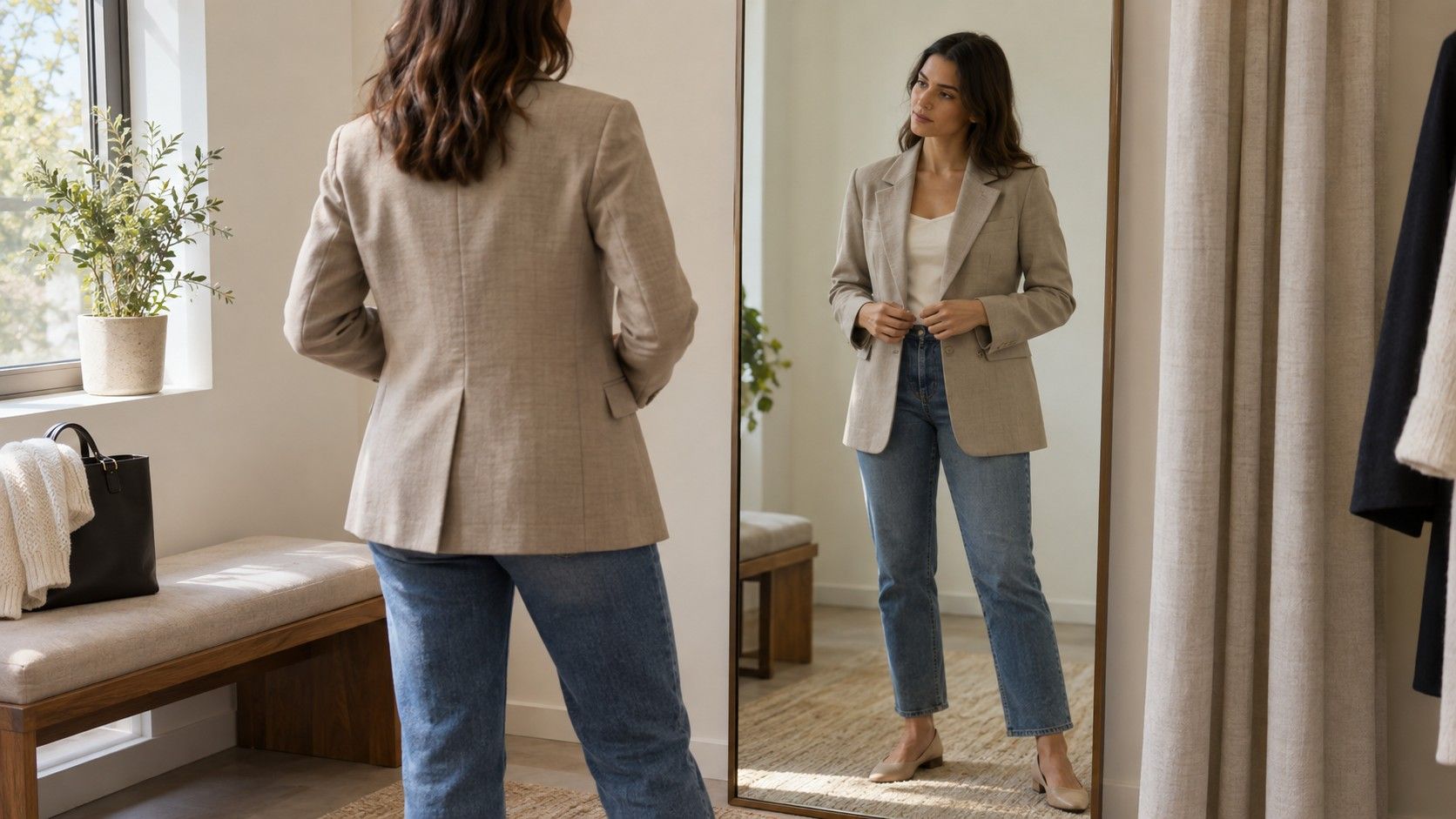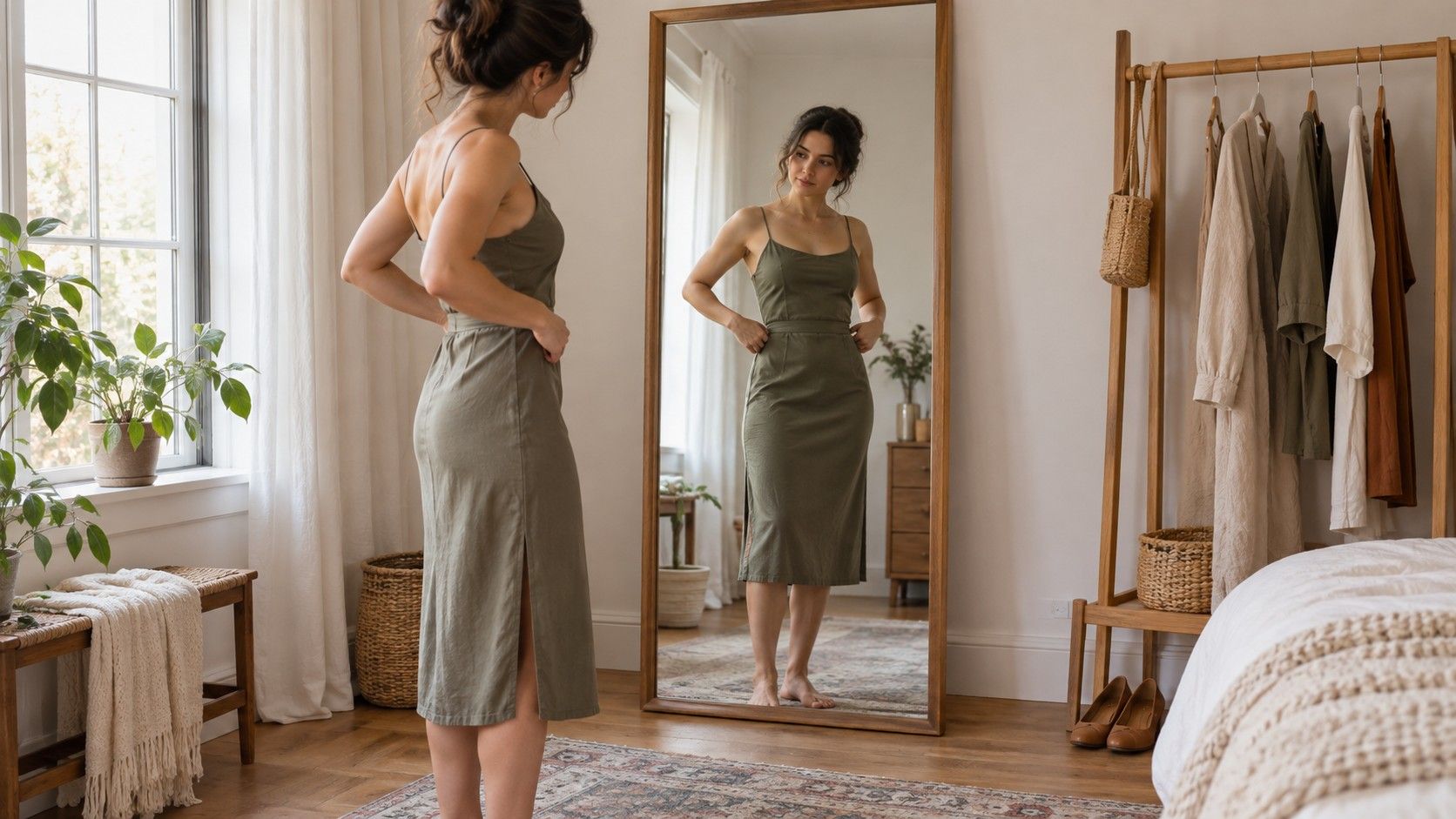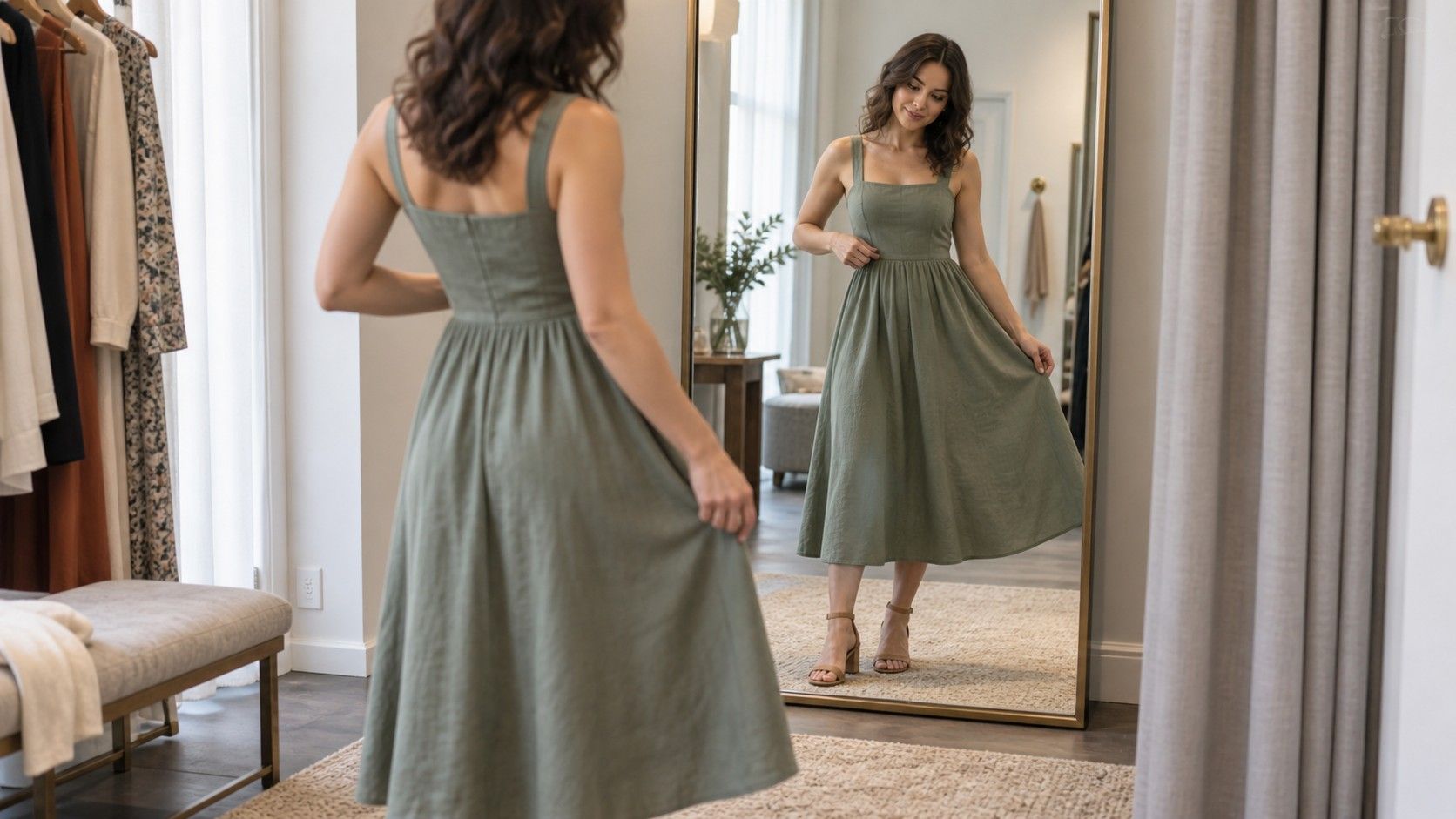
The best dress style for body shape is rarely a single named silhouette. A dress succeeds through several connected choices: where its waist seam lands, whether the bust darts point correctly, how the fabric responds to movement, and whether the skirt has enough room for your stride. Instead of carrying a list of rules into the fitting room, compare two or three dresses through the same practical tests. The result is a clearer picture of how each cut works on your proportions and for the way you plan to wear it.
Start with movement before deciding on a silhouette
A fitting-room mirror gives a still image, but most dresses are worn while walking, sitting, reaching, and turning. Begin with the closure fully fastened and the undergarments you expect to wear. Take several normal steps, sit on the bench, raise your arms, and twist gently from side to side. Watch whether the dress returns to its original position or whether the waist, neckline, and hem need to be pulled back into place.
Movement often reveals a fit issue that a body-shape rule cannot predict. If the whole dress climbs when you raise your arms, the bodice may be too narrow, too short, or cut with an armhole that restricts motion. If the front hem lifts while the back stays level, the garment may need more length over the bust or abdomen. If the skirt rotates as you walk, check the side seams and lining rather than assuming the silhouette is wrong for you.
Comfort is also specific to the occasion. A close waist may feel secure for a short dinner but distracting during a full workday. A loose column may be easy to sit in but awkward if a long back vent limits your stride. Ask what the dress needs to do for several hours. The answer gives you better criteria than whether a style is commonly recommended for a particular body shape.
See where the waist seam actually lands
Dress waist placement changes the relationship between bodice and skirt. A natural-waist seam usually sits near the narrowest part of the torso, but ready-to-wear patterns assume a standard shoulder-to-waist length. If your torso is longer, the seam may ride above your natural waist and make the bodice feel short. If your torso is shorter, fabric can pool above the seam or the neckline can sit too low. The label on the dress does not tell you where the seam will land on your body.
An empire waist sits below the bust and lets the skirt fall from a higher point. Check that the seam rests beneath the bust rather than cutting across it, and that there is enough vertical length in the front bodice. A high seam can feel relaxed when the skirt is soft, but a stiff or heavily gathered fabric may project outward. The effect comes from both placement and fabric volume, not from the empire line alone.
A dropped waist extends the bodice toward the upper hip before the skirt begins. It can create a long uninterrupted torso line, yet it also needs enough room through the lower abdomen and hip. Look for horizontal pulling or a seam that creeps upward as you walk. With a natural-waist dress, perform the same check at the waist seam: it should stay reasonably level and should not be forced upward by the hip or downward by the bust.
Try moving a removable belt a few centimeters up and down. This quick comparison shows whether you enjoy a higher, natural, or slightly lower point of definition without changing the whole dress. The most comfortable position may differ between a structured shirt dress and a fluid knit because each fabric distributes ease differently.
Compare wrap, fit-and-flare, and column dresses fairly
Comparing dress silhouettes and body shape works best when you separate construction from styling. A wrap dress has adjustable overlap, a fit-and-flare dress joins a closer bodice to a fuller skirt, and a column keeps a straighter line. None of those names guarantees fit. Two wrap dresses can behave differently because of neckline depth, tie position, skirt overlap, and fabric recovery.
| Silhouette | Key fitting point | Movement check |
|---|---|---|
| Wrap dress | Secure overlap at bust and skirt without pulling the tie too tight | Sit and take a long step to see whether the neckline or skirt opens |
| Fit-and-flare | Bust darts and waist seam should meet the body in the intended places | Raise arms and check whether the entire bodice lifts |
| Column | Enough ease at hip, seat, and thigh for the fabric weight | Walk, climb a step, and test the back or side vent |
| Shirt dress | Button line lies flat and belt position remains stable | Sit to check for gaping between buttons and skirt restriction |
On a wrap dress, the tie should control closure without doing all the structural work. If tightening it is the only way to stop the neckline gaping, the bust or shoulder area may need a different size or cut. Check the inner fastening and skirt overlap while seated. A small snap can solve a neckline preference, but it cannot create missing fabric across the bodice.
For a fit-and-flare shape, look at the bust dart before judging the skirt. The dart point should aim toward the fullest part of the bust and stop short of it. When darts sit too high or low, the bodice can wrinkle and pull the waist seam out of position. The skirt volume can then appear uneven even when its circumference is generous. Petite, tall, and full-bust pattern variations may change this relationship more effectively than switching to another silhouette.
A column dress depends on ease and fabric. It does not need to hang perfectly straight or hide the outline beneath it. It does need enough space for the seat and stride, with side seams that remain near the sides. A shaped column with darts can follow the body, while an oversized one creates a deliberate loose line. Choose between them according to the amount of contact and movement you prefer.
Use fabric weight to judge the cut honestly
Fabric can make the same paper pattern look and feel entirely different. Crisp poplin holds gathers away from the body; viscose settles into folds; ponte knit stretches while keeping a defined edge; thin jersey follows every layer beneath it. When asking how should a dress fit, include what the textile is designed to do. Cling in a soft knit is not automatically a sizing fault, and structure in taffeta is not evidence that the skirt is too large.
Check opacity and lining under the fitting-room lights, then use a phone light from the side if the store lighting is unusually dim. A lining should move with the outer skirt rather than twisting or catching above the hip. If the outer fabric contains stretch but the lining does not, sit and take a full stride before buying. The less flexible layer determines your actual range of movement.
Heavier fabric can pull a wrap neckline open or drag a waist seam downward. Very light fabric may collapse into a gathered waist and create more visual texture than expected. Neither effect is inherently undesirable; it simply changes the silhouette shown on the hanger. Hold a small section of the skirt, release it, and see how quickly it falls back. Then compare that response with your preferred level of structure.
Print placement deserves a glance because it can mimic a fit problem. A stripe that curves around the body may be part of the design, but abrupt distortion near a seam can show pulling. Large motifs can land differently from one garment to another, especially on wrap fronts or gathered skirts. Compare the seam lines first, then decide whether you like the visual effect.
Ask five useful questions in the fitting room
First, does the shoulder and upper bodice stay in place when you lift your arms? Second, does the waist seam sit where the design intends without cutting in or drifting? Third, do the bust darts, neckline, and closures lie securely with your usual bra? These checks establish whether the bodice is carrying its share of the fit instead of relying on a belt or stretch fabric.
Fourth, can you sit, walk quickly, and climb a step without the skirt twisting, opening, or restricting you? Pay attention to hem length during movement, particularly with a wrap front or high slit. A hem that feels comfortable while standing can become much shorter when seated. If the dress is for work or an event, test it with the shoes and outer layer you expect to wear whenever possible.
Fifth, do you like the dress when it is not arranged for the mirror? Release your stomach, lower your shoulders, put your phone away, and stand as you normally would. Then move again. A good choice does not have to create a prescribed proportion; it should support the silhouette you enjoy without constant management.
Take quick notes on the seam position, fabric, size, and one successful or unsuccessful detail. Over several fitting sessions, patterns become obvious: perhaps wrap closures require more overlap, petite bodices place the waist more accurately, or a moderate skirt volume suits your daily movement. Those findings are far more transferable than a rule assigning every body shape one dress.