Neckline charts make tidy promises, but a neckline never appears on the body by itself. Its width and depth interact with shoulder seams, sleeves, fabric, bra shape and the layer worn over it. Even two crew necks can behave differently when one is cut in rigid cotton and the other in a fluid knit. Instead of assigning one best neckline to a body shape, compare the whole upper part of the garment and notice which visual lines and practical details suit the way you dress.
Why neckline advice changes with the garment itself
The outline nearest the face gets most of the attention, yet the shoulder line often does equal work. A crew neck on a fitted T-shirt creates a compact frame. Put the same round opening on a dropped-shoulder sweatshirt and the visible width extends toward the upper arms. The name of the neckline has not changed, but its relationship to the shoulders has.
Fabric drape changes that relationship again. A crisp poplin square neck holds a clear geometric edge, while a soft jersey square may round and widen as it stretches. Ribbed knit can pull the opening narrower across a fuller bust. A woven top with darts may keep its intended shape with less tension. When comparing necklines for body shape, check the cloth before trusting the category on the label.
Colour and trim can make an opening read wider or deeper. Contrast piping draws the complete outline. A neckline in the same colour as the skin creates less of a hard border, while a dark top against a pale underlayer makes every edge visible. Gathered fabric, lace, a collar or a row of buttons adds another focal point. None is inherently helpful or unhelpful; it simply changes what your eye notices first.
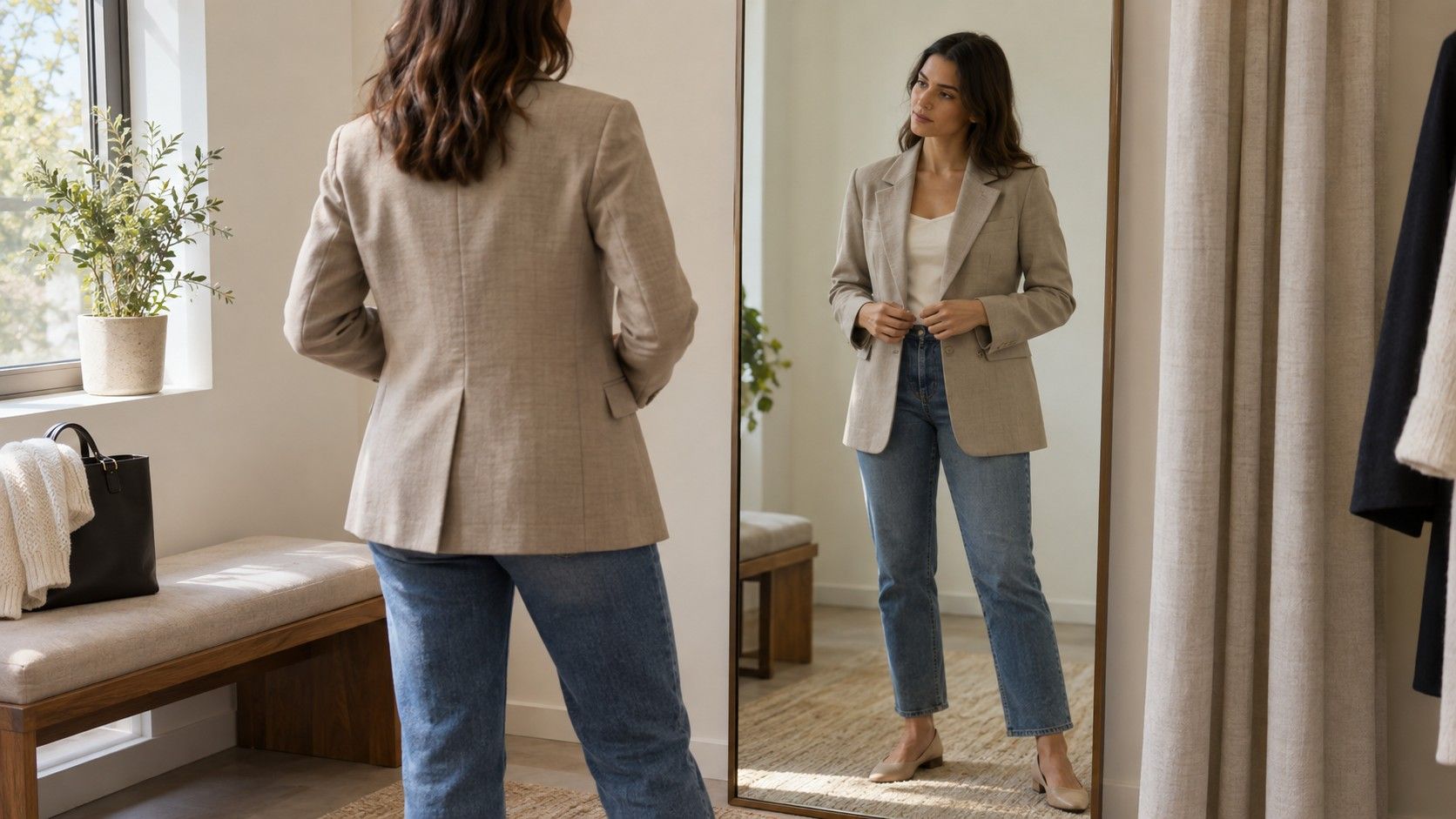
Stand at a normal conversational distance from the mirror. Close-up fitting-room views exaggerate the chest area and hide the sleeves. Look at the line from the outside of one shoulder to the other, then at the open space between neck and garment. If the combination feels busy, change one variable at a time. Roll down a collar, remove a necklace or try the top without a jacket before rejecting the neckline itself.
Comparing depth, width and shape
Depth creates a vertical opening. A shallow V ends high on the chest and behaves more like a soft crew neck. A deeper V creates a longer central line, although the effect depends on how wide the two sides spread. A narrow V can feel quite contained; a wide V may expose more of the shoulder area even when its point is not especially low.
Width directs the eye sideways. Boat necks and wide scoops reveal more space toward the shoulder line. This is why advice about the best neckline for broad shoulders often recommends a narrow V. That suggestion can work when someone wants a stronger vertical, but it is not a requirement. A broad shoulder can look excellent in a boat neck, especially when the wearer enjoys a clear horizontal line and the sleeve seam sits cleanly.
Shape introduces a different kind of contrast. A square neck repeats angles found in tailored trousers, sharp collars and structured jackets. A scoop neck offers a softer curve. A crew neck makes a complete, close frame around the base of the neck. The neckline for a small bust is sometimes reduced to advice about adding width or detail, but personal comfort and garment fit matter more. A plain V may be the easiest everyday choice; a gathered square neck may feel right on another day.
| Neckline detail | What it tends to emphasise | Fit point to inspect |
|---|---|---|
| Deep or narrow V | A longer central opening | The point should lie flat rather than gape when you bend |
| Wide scoop or boat neck | The horizontal shoulder area | The edge should stay in place over bra straps |
| Square neck | A defined frame around the upper chest | Corners should not collapse or pull outward |
| Crew neck | A compact area close to the face | The collar should not push against the throat or ripple |
Use the table as a set of observations, not a ranking. Take front and three-quarter photos in the same light. The angled view often reveals gaping that is invisible from straight ahead. It also shows whether the fabric projects away from the bust or follows it smoothly. That information is far more specific than a general neckline body proportions rule.
How sleeves alter the same neckline
Sleeves determine where the garment appears to end across the upper body. A sleeveless top places that edge at the armhole. A cap sleeve adds a short horizontal ledge. A set-in long sleeve continues the line to the wrist, while a dropped shoulder shifts the seam beyond the natural shoulder point. Any of these can change how wide or contained the neckline feels.
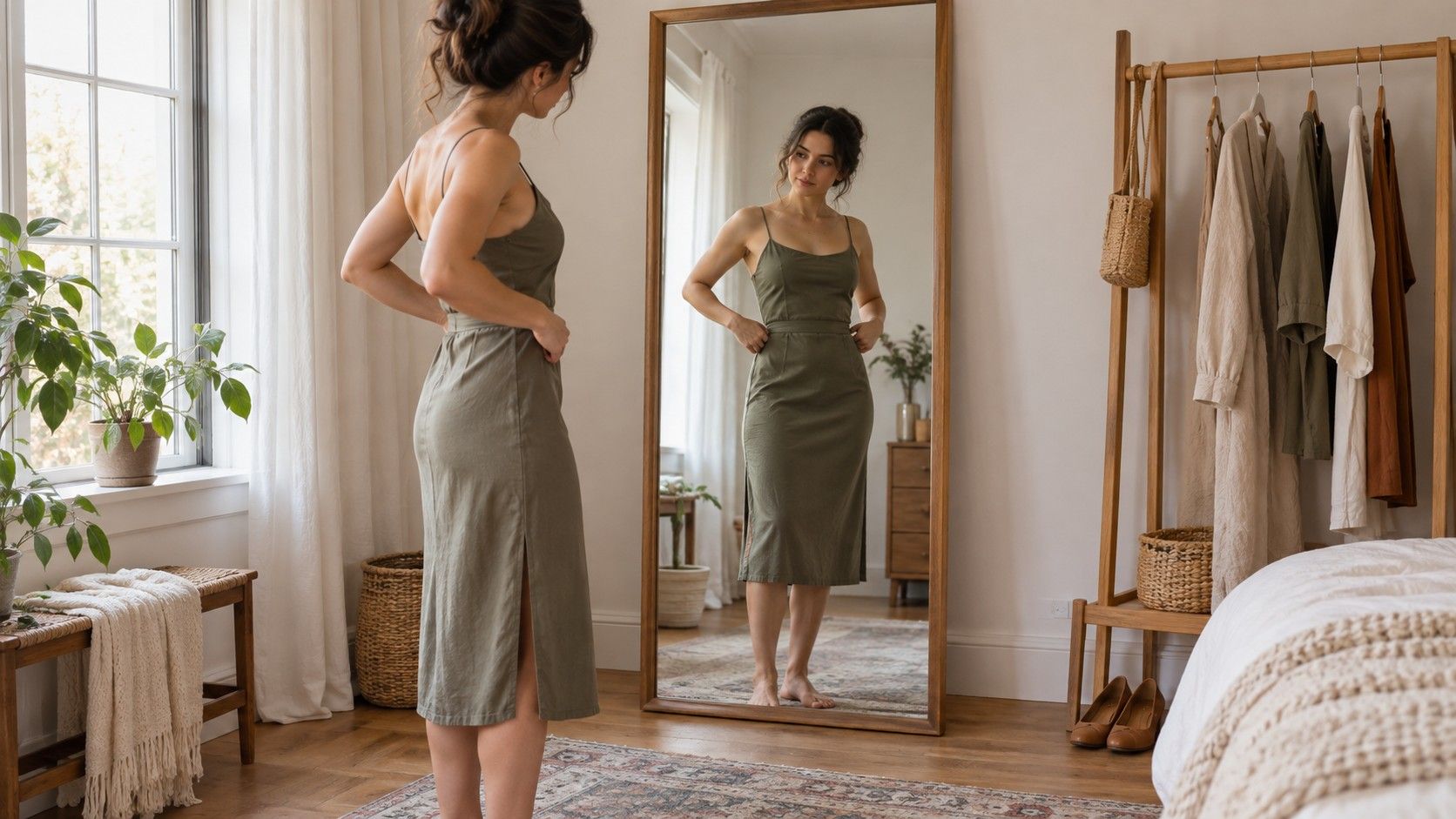
Strap placement is particularly noticeable on camisoles and summer dresses. Straps close to the neck create a narrower frame and may reveal more of the outer shoulder. Wider-set straps echo a square or boat neckline and can create a broad open shape. Check the back as well as the front. A strap that looks well placed in front may angle across a bra strap or slip because the back neckline is too wide.
Sleeve volume adds another line. A puff sleeve can make a modest crew neck feel more decorative and expansive. A close sleeve keeps attention near the central opening. If a top feels visually louder than expected, cover one sleeve in the mirror and compare. The issue may be the sleeve head, cuff or shoulder gather rather than the neckline.
Movement gives a quick reality check. Reach forward, lift a bag and rotate each arm. If the armhole is too tight, it can drag a wide neckline toward one side. If a dropped shoulder has too much fabric, the neckline may creep backward during the day. A good static view is useful, but a top that needs constant resetting rarely becomes a favourite.
Trying necklines with your usual bra and layers
Wear the bra or support garment you normally choose for that top. Cup shape changes how fabric leaves the chest, and strap position affects whether a wide opening stays practical. A plunge bra can make a deep V easier to wear, but buying special underwear for every neckline is not always worth the effort. If a top only works with a bra you dislike, that is useful information before the tag comes off.
Check the neckline while sitting and bending to pick something up. A wrap V that lies flat while standing may gape when the torso shortens. A square neck can shift forward if the straps are slightly long. Fashion tape may solve a special-occasion problem, but everyday clothes should usually remain dependable without a complicated setup.
Now add the layer that belongs to the outfit. A blazer covers the outer part of a boat neck and turns it into a smaller central shape. An open cardigan leaves more of a scoop visible. A buttoned shirt under a crew-neck sweater introduces a collar and a second line near the face. These combinations explain why a neckline that seems unremarkable alone can become the most useful one in a wardrobe.
Collar height deserves its own check. A mock neck may feel comfortable in a fine stretch knit and restrictive in thick ribbing. A shirt collar can sit neatly under a jacket or collide with broad lapels. Turn your head, look down and sit for several minutes. Pressure at the throat or fabric rubbing under the chin will matter after an hour, regardless of how balanced the outfit looks.
Keeping the options you genuinely reach for
Instead of trying to identify one signature neckline, review the tops you already wear. Separate the dependable pieces from those that stay on the hanger. Look for practical patterns: openings that remain in place, straps that conceal the underwear you prefer, collars that tolerate a commute, and fabrics that recover after washing. Your repeated choices contain better evidence than a diagram.
It helps to compare near-matches. Put on two black tops with different openings, or two V necks with different sleeve shapes. Keep the trousers, hair and jewellery the same. This isolates what the neckline contributes. If you change the entire outfit between tests, it becomes difficult to tell whether you prefer the opening, the colour or simply the better-fitting garment.
Comfort can also change by setting. A wide square neck may be exactly right for dinner but irritating under a work lanyard. A high crew neck may feel secure on a windy walk and too warm in an office. Keeping more than one option is not inconsistency. Clothes serve different days, and shoulder and bust balance can mean calm continuity in one outfit and deliberate contrast in another.
When shopping, take a few seconds to inspect the neckline on the hanger. Is the binding already rippled? Are the corners reinforced? Does the back opening match the width at the front? Then try it with movement and an ordinary layer. The neckline worth keeping is the one that holds its shape, works with your existing clothes and lets you forget about it once you leave the mirror.