A short torso and long legs can make ordinary size labels surprisingly unhelpful. A shirt may fit through the chest but bunch at the waist, or jeans may reach higher than their product photos suggest. The useful response is not to change your body or obey a set of style rules. It is to check the exact places where garments meet, overlap, and bend.
Separate what you see in the mirror from garment fit
The long legs short torso body type describes a proportion, not a clothing size. Two people can share that proportion while having completely different shoulder widths, bust measurements, waist shapes, and fit preferences. A mirror gives a first impression, but the garments that repeatedly cause trouble provide better information.
Notice whether standard tops create folds just above the waistband, whether shirt buttons continue below the place where you would naturally tuck them, and whether high-rise jeans reach close to the lower ribs. These clues point to vertical fit. They do not mean that a top is too large overall or that the jeans are the wrong numerical size.
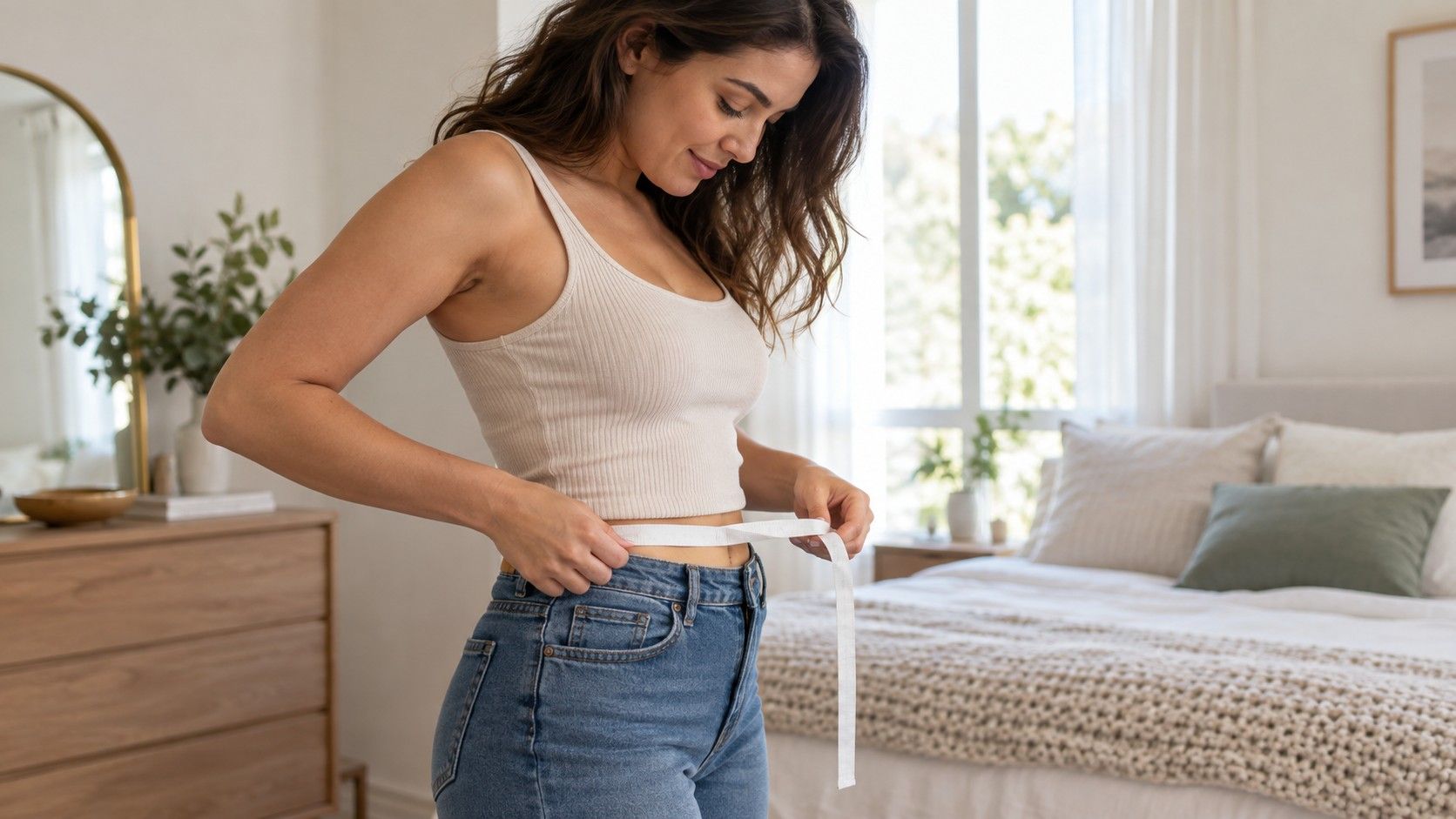
Use a soft tape on clothes rather than trying to measure an abstract torso line. Measure a comfortable top from the highest shoulder point beside the neck to its hem. Record the front rise of jeans from the crotch seam to the top of the waistband. Keep both numbers in your phone. Comparing them with an online size chart is far more reliable than relying on a model's height alone.
Also check your seated posture. A waistband that appears moderate while standing can move toward the ribcage when you sit. A shirt with a neat front can balloon at the back once it is tucked. Short torso clothing works best when it leaves room for those ordinary changes rather than holding one static mirror pose.
Find waistbands that remain comfortable all day
High rise, mid rise, and low rise are relative retail terms. On a short torso, a brand's high rise may sit above the natural waist, while another brand's mid rise may land exactly where you expected the high rise to be. Look for the stated rise in inches or centimeters and compare it with a pair you already wear comfortably.
Waistband depth matters almost as much as rise. A deep, rigid band takes up more vertical room and may press against the lower ribs. A narrow band has less presence but can fold or roll at a natural crease. Contoured waistbands, which are shaped rather than cut as a straight strip, often follow the body more comfortably, although the result depends on the individual pattern.
Mid-rise jeans are a useful reference point for many short torso long legs outfits because they leave visible space between the waist and the ribcage. They are not a universal answer. If you enjoy a strong high-waisted look and can sit comfortably, there is no reason to avoid it. The practical test is whether the front rises into the ribs, the back gaps, or the crotch seam drops when the waistband is positioned where you like it.
Try trousers with the top you plan to wear, not only the fitting-room camisole. Tuck the top, untuck it, and raise your arms. If the waistband and hem compete for the same narrow area, a partial tuck, a shorter top, or a lower rise may reduce bulk. If they remain flat and comfortable, the combination is already doing its job.
Create breathing room with necklines and layers
When people ask how to dress a short torso, neckline advice often focuses on making the upper body appear longer. A more practical reason to consider an open neckline is that it changes where fabric and detail collect. A V-neck, open collar, or partially unbuttoned shirt creates a vertical opening between the face and the waist, while a high crew neck forms a more compact block of fabric.
Neither effect is better by default. A high neckline may be exactly what you want in cold weather or beneath a structured jacket. If it feels visually crowded, try reducing detail elsewhere: choose a smoother fabric, skip a bulky necklace, or leave the outer layer open. An open neckline can create space without requiring a low cut; even one or two open buttons on a shirt can change the line.
Layering is easiest when each hem has a clear purpose. A base layer ending at the waistband and an open cardigan ending below the hip create two distinct vertical lines. Two tops ending within an inch of each other can look accidental and may bunch together. Before buying, view the combination from the side and check whether the inner layer collects above the waist.
Fabric thickness deserves attention. A heavy knit tucked into a high waistband occupies scarce space and can feel tight after a meal. A fine knit, smooth jersey, or softly draped shirt creates less bulk. If you prefer substantial fabric, leaving it untucked or using a shorter cut may feel easier than trying to compress it into the waistband.
Choose a jacket by hem and button placement
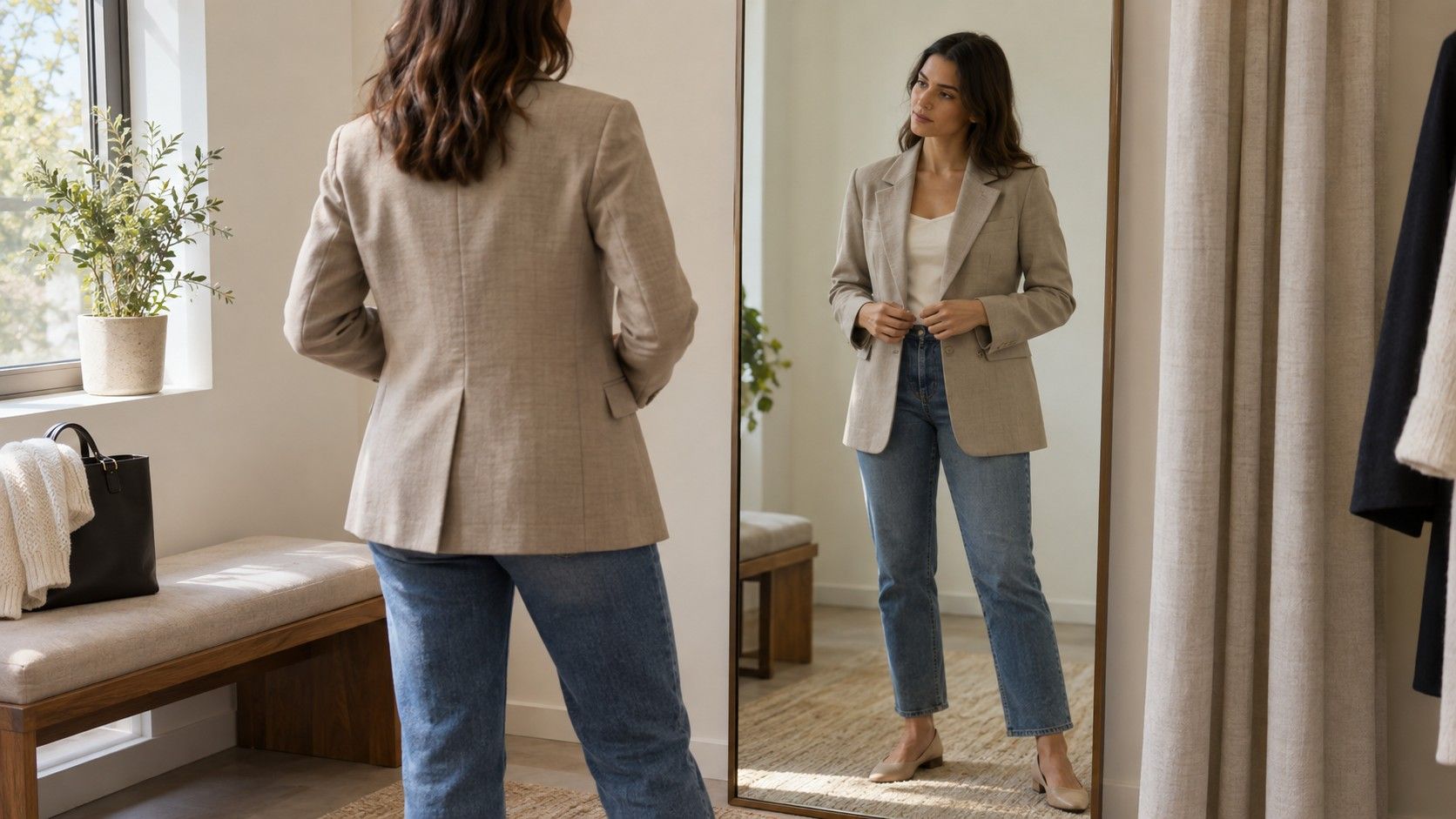
Jacket length is only one part of the fit. Button stance, the vertical position of the main fastening, determines where the jacket appears to close around the torso. If the button sits below your natural waist, the fronts may pull upward or form diagonal creases. If it sits too high, the jacket can feel tight across the chest even when the shoulder size is correct.
Close the jacket and look for tension lines, then open it and walk. Many jackets are worn open most of the time, so both views matter. A cropped jacket that ends at the waist gives a clean boundary above long legs. A longer blazer can create more vertical space through an open front, particularly when its lapels and buttons are not crowded together.
Shoulder fit should remain the priority because jacket length is comparatively easy to vary. The shoulder seam should meet the intended edge of the shoulder, and the sleeve should allow forward reach. If the shoulders fit but the torso feels compressed, compare a single-breasted style with a lower button stance or softer construction rather than automatically moving up a size.
Pockets, belts, and lapels add horizontal markers. A belted jacket places emphasis exactly where the belt closes; patch pockets add detail lower down; narrow lapels leave more uninterrupted front space. Use these details according to what you enjoy seeing. They are visual tools, not methods for disguising a proportion.
Run simple tests before removing the tags
Good fit is easier to judge at home with the rest of your wardrobe. Keep tags attached and try the new piece with at least three existing items. Use the shoes and underlayers you would normally wear. Natural daylight also reveals pulling, transparency, and fabric texture that may be hard to see under fitting-room lighting.
| Garment area | Test | What the result can tell you |
|---|---|---|
| Waistband | Sit for ten minutes and bend to tie a shoe | Whether the rise presses, rolls, or shifts |
| Top hem | Raise both arms and reach forward | Whether the top stays tucked or gathers |
| Neckline | Add the intended jacket or cardigan | Whether layers feel open or crowded |
| Jacket front | Button it, then walk with it open | Whether button stance and length both work |
| Full outfit | Sit, climb stairs, and use the pockets | Whether the proportions remain comfortable in motion |
Photograph the outfit from front and side with the phone held around chest height. A very high or low camera angle changes the apparent leg-to-torso ratio, so keep the lens level. You are not searching for an ideal silhouette. The photo helps reveal a bunched hem, a jacket pulling upward, or three strong horizontal lines that were less obvious in motion.
Check the garment after thirty minutes, not just thirty seconds. Waistbands warm and settle, knits relax, and shirts creep out of a tuck. If you keep adjusting a piece during an ordinary trial at home, that habit will probably continue outside. A small alteration may solve sleeve or hem length, but it is less likely to change an uncomfortable rise or badly placed button stance.
Build a personal formula without turning it into a rule
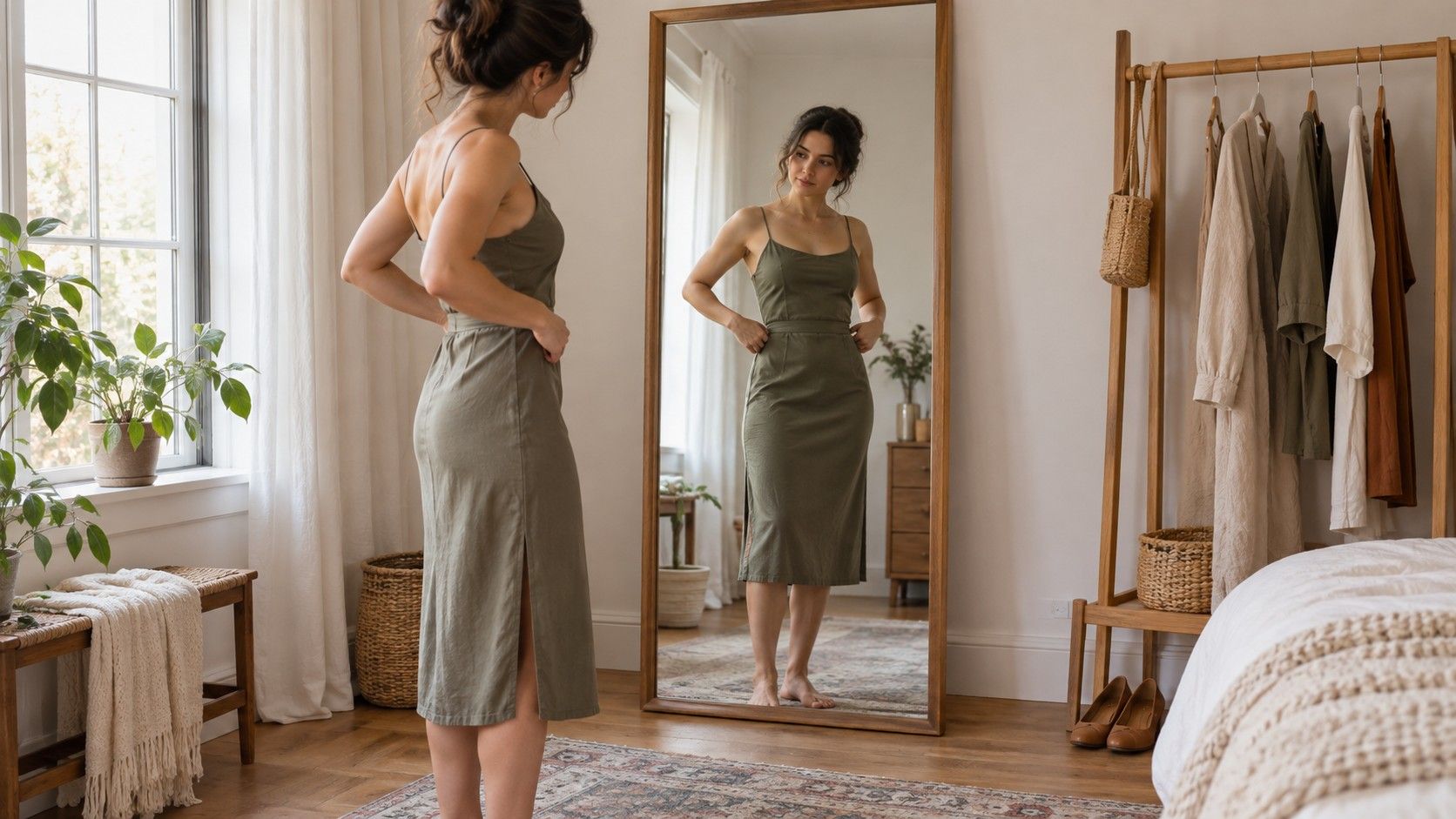
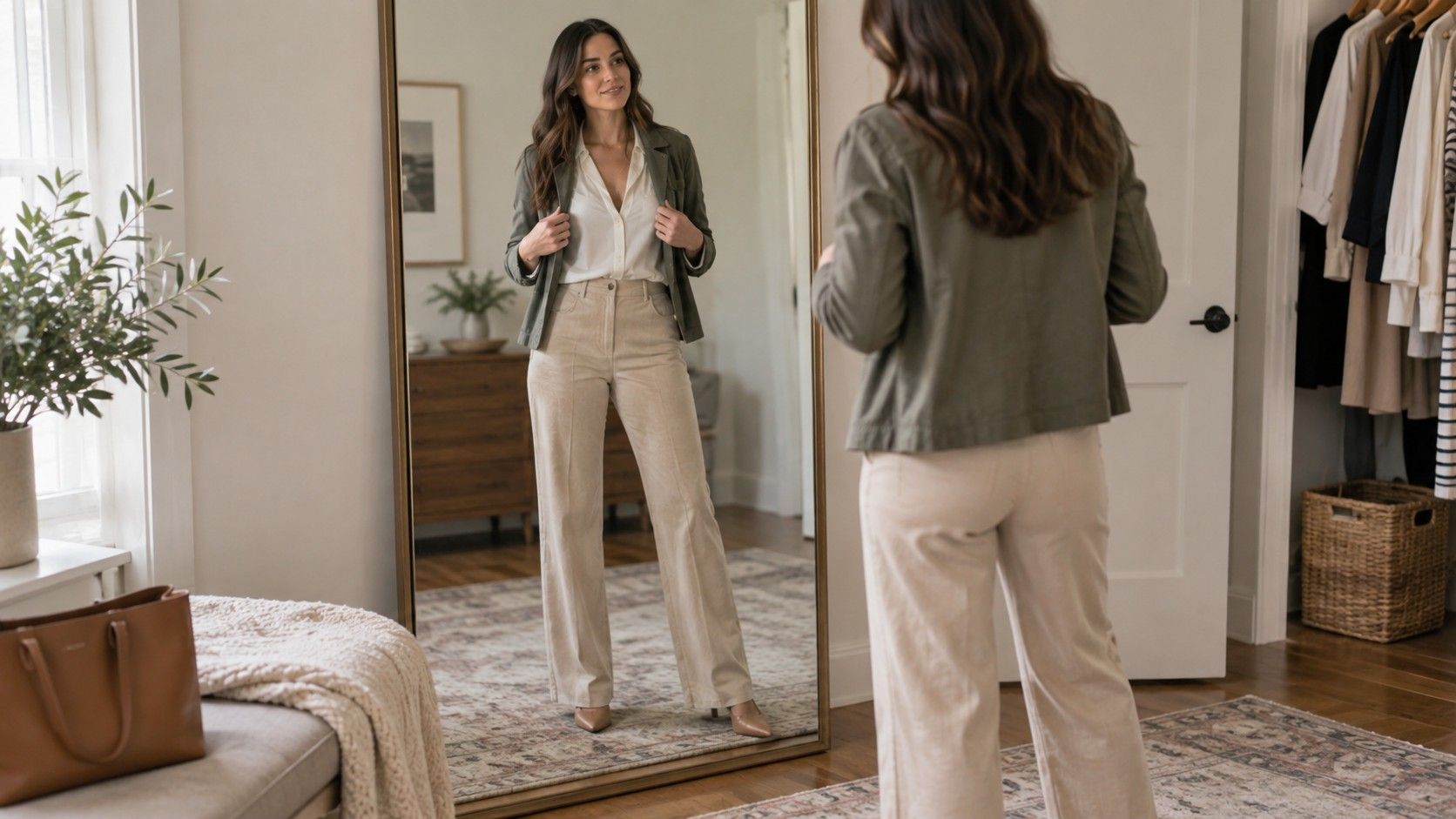
A dependable formula might pair mid-rise trousers with a top that ends near the waistband and an open, longer jacket. Another might use high-rise wide-leg trousers with a fitted knit left slightly untucked. A dress with a gently dropped or undefined waist may feel easy because it avoids a crowded waistband altogether. The useful formula is the one that repeats comfortably across several garments.
Color can simplify short torso long legs outfits when several layers meet in a small area. Similar colors between top and trousers create a quieter transition. Strong contrast highlights the waistline. Both approaches are valid; choose contrast when you want the waist to be a deliberate feature and tonal dressing when you want the garment shapes to carry more of the interest.
Keep notes on the measurements that succeed: front rise, top length, jacket length, and perhaps the button position on a favorite blazer. Brand sizes can change, but those physical dimensions remain useful. Over time, shopping becomes a comparison with clothes that already work rather than a debate about which body-shape advice applies.
Your preferred proportions may also change with mood and occasion. A compact jacket and high waist can make the leg line prominent; a long open shirt can give the torso more visual length. Neither arrangement is a correction. The point of fit checks is to make each choice deliberate, comfortable, and easy to repeat when you need an outfit that simply works.