Shoulder and hip balance is not about disguising one part of the body. It is about noticing where an outfit places width, structure, and movement. A sleeve head, trouser hem, neckline, or stiff fabric can change the silhouette more than the garment's color. Once you can see those effects in clothes you already own, proportion becomes a practical fitting tool rather than a set of rules about what your body is allowed to wear.
Seeing shoulder and hip balance in your own clothes
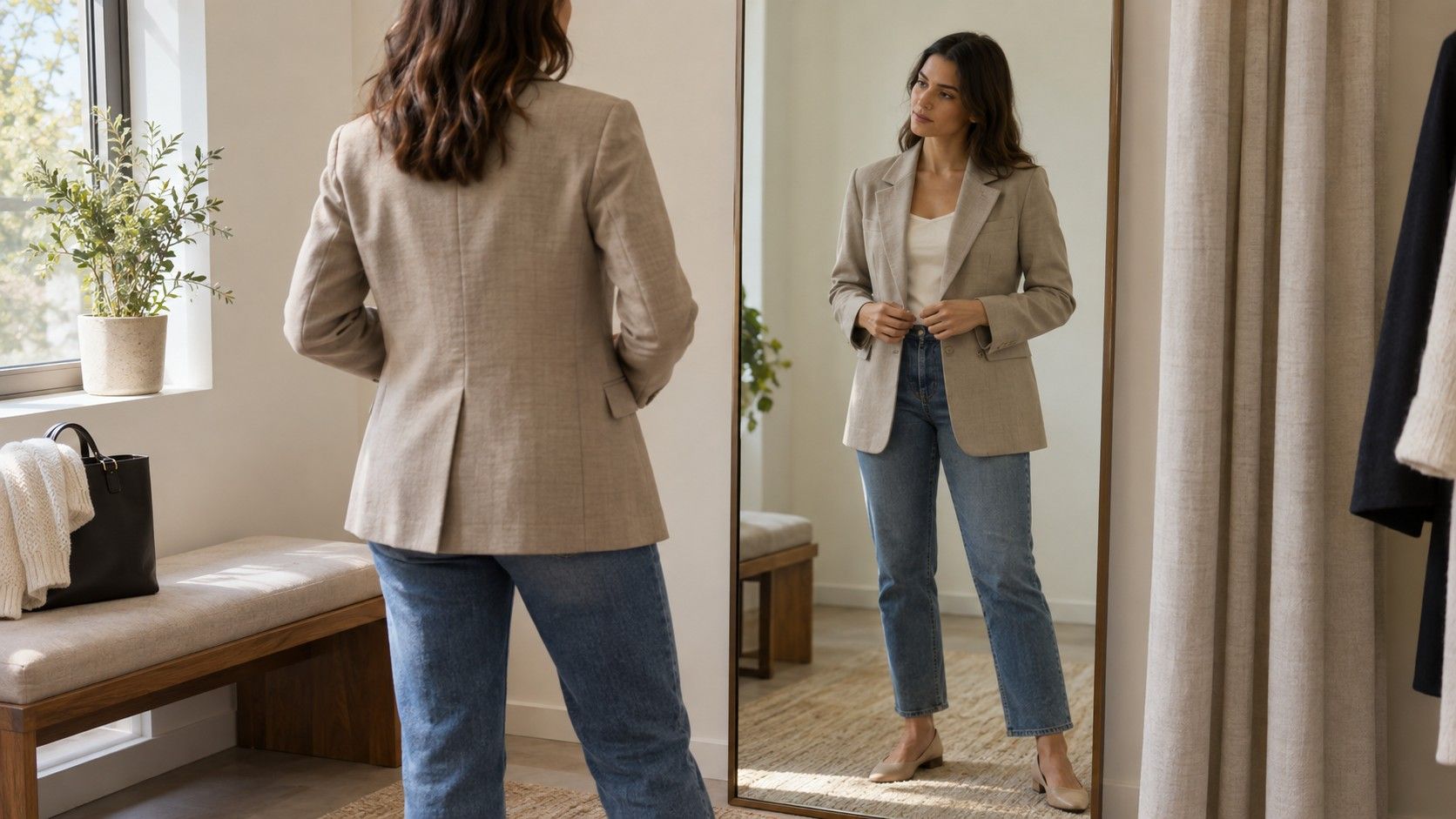
Start with a simple outfit: a close-fitting top and straight trousers in similar visual weight. Stand several feet from a full-length mirror with your arms relaxed. Notice whether the outer shoulder line and the widest visible point of the hips appear close, or whether one extends farther. This is a visual check, not a judgment. The shoulder to hip ratio body shape gives a useful baseline, but clothing can strengthen or soften that baseline immediately.
Next, change only one garment. Put on a boxy cropped jacket over the same trousers. A firm shoulder seam, short hem, and dense fabric may make the upper half look more prominent. Replace it with a soft cardigan that falls below the hip and the outline changes again, even though your measurements have not. This one-variable comparison is the quickest way to separate body proportions from styling effects.
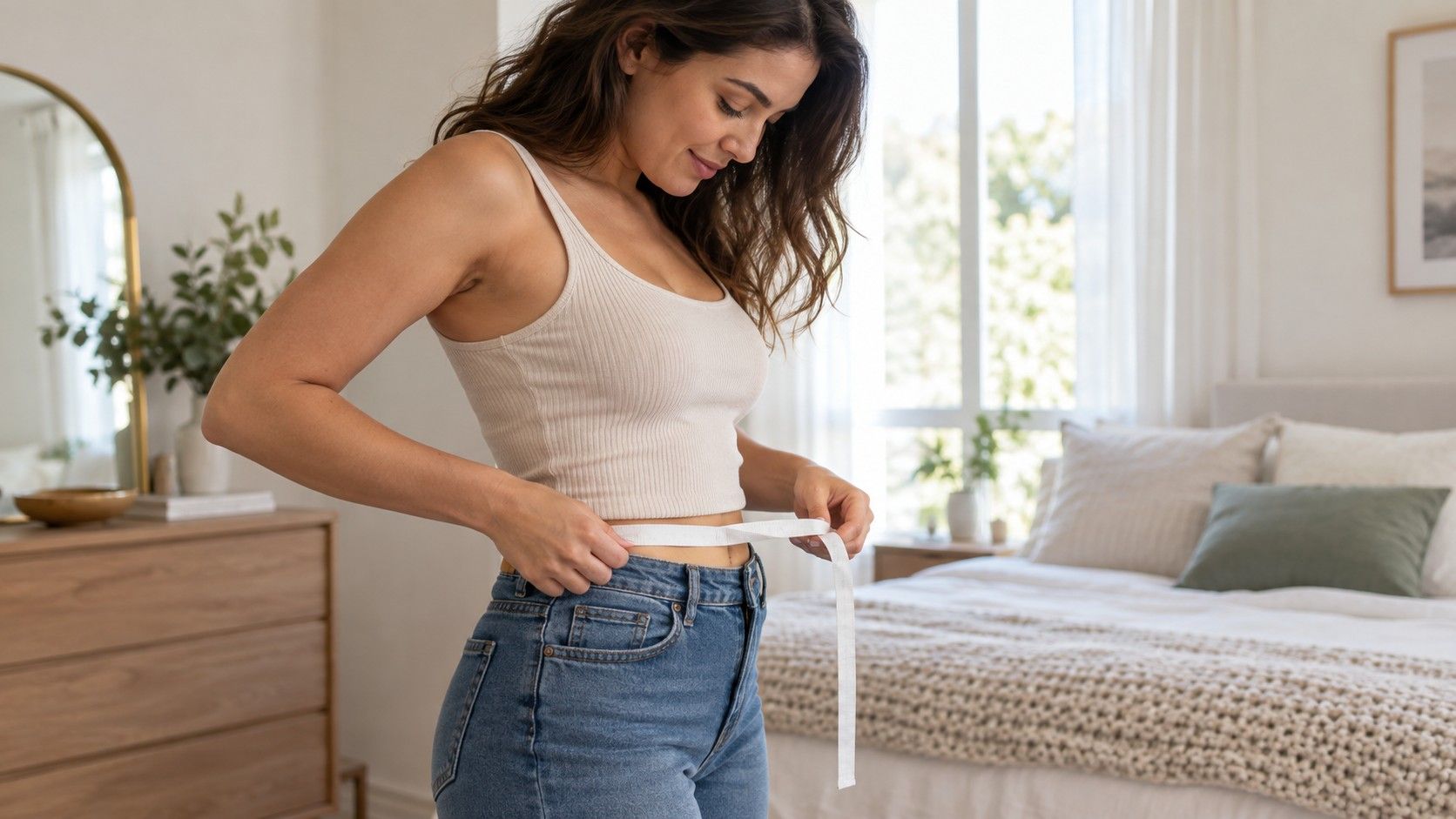
Photographs can help when the mirror encourages constant turning. Place the phone at roughly waist or lower-chest height, use the standard lens, and stand far enough away to avoid wide-angle distortion. Take front, side, and back views. A high camera angle can narrow the lower half, while a close camera can enlarge whichever part is nearest the lens. Keep posture natural; pulling the shoulders back hard creates a different line from the one you use while walking or sitting.
Look for garment evidence as well as outline. Shoulder seams that fall beyond the arm, lapels that bow, pockets that flare, or a hem that lifts at the back all affect visual balance. Sometimes what appears to be a proportion issue is simply the wrong size or insufficient room through the upper back or seat. Resolve obvious fit tension before deciding that the silhouette needs a styling adjustment.
Why seams and sleeves change the upper body
A set-in sleeve usually gives the clearest shoulder boundary. When its seam lands near the shoulder edge, the garment follows your line without adding much width. A dropped shoulder moves that boundary outward, especially in thick sweatshirt fabric or a crisp jacket. Raglan sleeves remove the horizontal endpoint and can create a softer transition from neck to arm, although high-contrast panels may draw attention back to the shoulder area.
Sleeve shape determines where volume appears. A puff concentrated at the sleeve head adds visual weight at shoulder level. A bishop sleeve that stays narrow near the shoulder and expands toward the cuff moves the emphasis lower. For someone exploring how to balance broad shoulders, that distinction is more useful than avoiding statement sleeves altogether. The same dramatic sleeve can widen the top or lead the eye toward the hands depending on where it begins to expand.
Necklines alter the internal lines of the upper body. A wide boat neck echoes the shoulder line and can make it appear broader. A narrow V or open vertical placket creates a longer central path, while a high contrast crew neck forms a compact horizontal frame. None is automatically correct. If you want to emphasize shoulders, a boat neck may do exactly what you want; if the outfit already has strong shoulder structure, a quieter neckline can prevent several competing focal points.
Check the fabric before blaming the cut. Stiff denim, bonded jersey, and heavy tweed hold volume away from the body. Fine knit, washed silk, and fluid viscose tend to drape closer. A soft dropped-shoulder top may add less apparent width than a sharply pressed set-in cotton shirt. In the fitting room, view the shoulder line from the back as well as the front, and lift your arms to make sure a neat outline has not been achieved by restricting movement.
How trouser and skirt volume affects the lower half
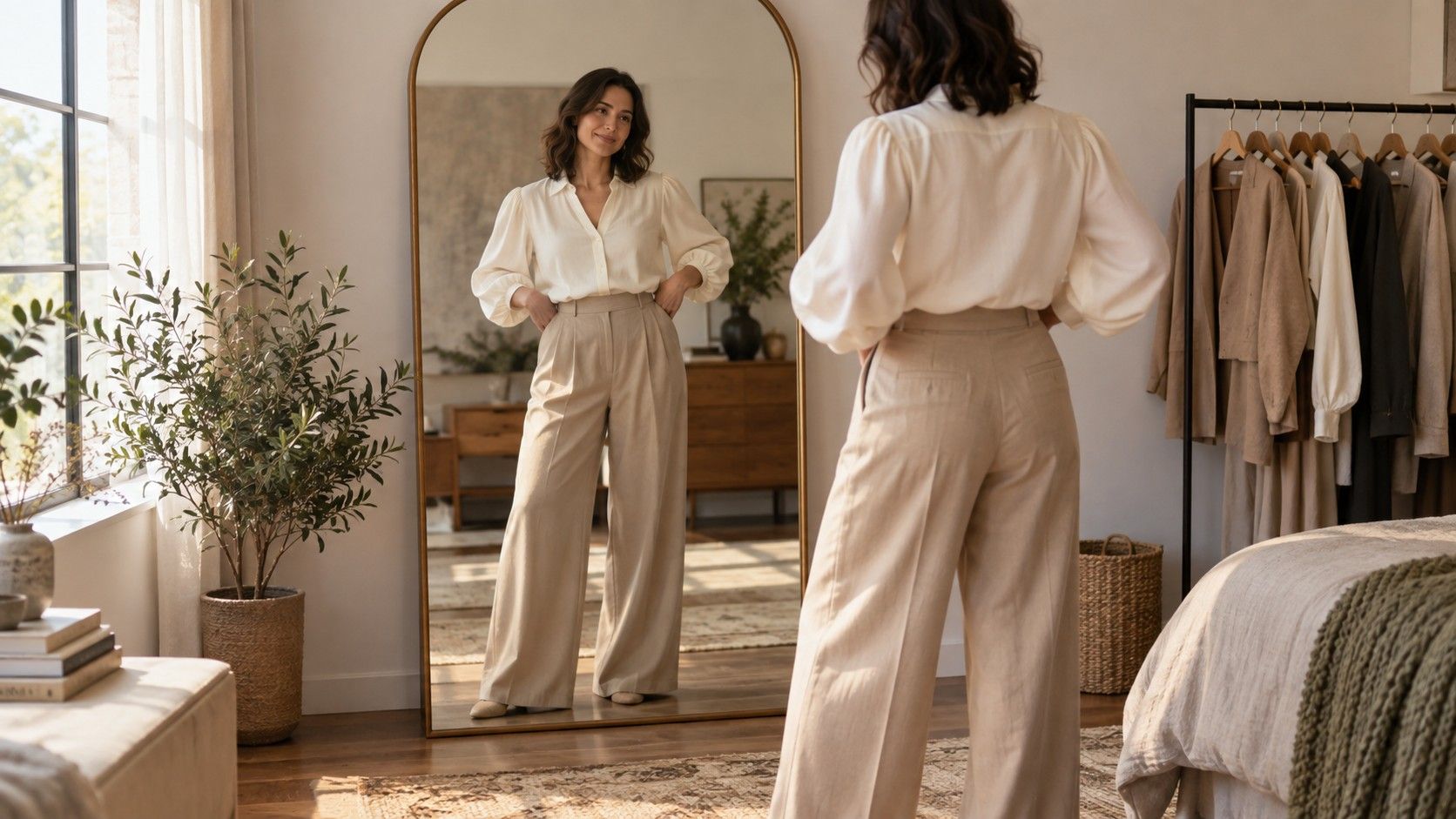
Lower-body volume is controlled by more than the hip measurement. Trouser rise, pleats, pockets, thigh ease, and hem width decide where the eye reads fullness. A narrow ankle can make the hip area appear more prominent by contrast. A straight or gently wide leg carries some width downward and creates a more continuous line. Very wide fabric is not required; even a few extra inches at the hem can change the relationship with a structured shoulder.
Pleats need room to remain closed. If they pull open while standing, they create tension rather than intentional volume and may indicate that the trouser needs more space through the hip or rise. Side pockets can have the same effect when they gape. Clean-front trousers are not universally more flattering, but they make it easier to see whether the garment's shape comes from the cut or from fabric being forced outward.
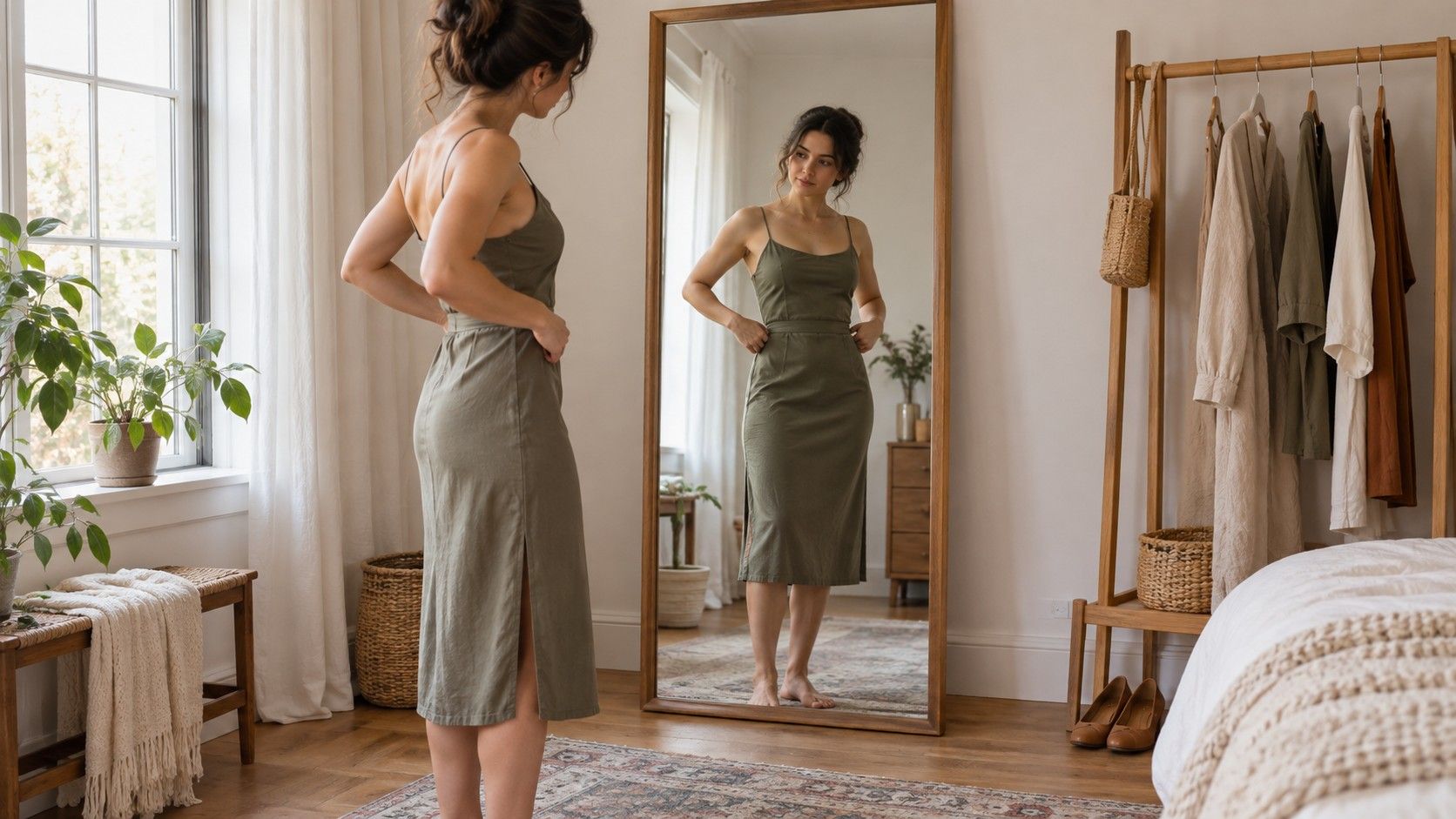
Skirt silhouettes redistribute visual weight in distinct ways. A pencil skirt follows the hip and narrows toward the knee. An A-line begins to open below the waist, while a gathered skirt creates volume immediately at the waistband. For hip balance outfits, choose the location of volume deliberately. If a top has pronounced shoulders, a modest A-line or straight wide trouser can echo that width. If the top is soft and narrow, a close skirt can produce a clean column rather than an imbalance.
| Garment detail | Typical visual effect | Fitting-room check |
|---|---|---|
| Dropped shoulder in firm fabric | Extends the upper outline | Check seam position and upper-arm movement |
| Volume at the sleeve cuff | Moves attention below the shoulder | Make sure the cuff does not overwhelm the hand |
| Straight or wide trouser hem | Carries lower-body width downward | Walk and confirm the fabric falls without twisting |
| Gathered skirt at the waist | Adds immediate lower-half volume | Check that gathers lie evenly rather than bunching |
| Long open layer | Creates two vertical outer lines | View it open, closed, seated, and in motion |
Hem length matters because it decides where a line stops. Cropped trousers ending at the widest part of the calf can feel visually abrupt, while a full-length hem creates a longer line. A skirt ending at a narrow point of the leg produces a different rhythm from one ending at the widest point. These are observations to test with your shoes and movement, not universal prescriptions.
Combining proportions without creating a costume
The most convincing outfits usually repeat one or two ideas instead of correcting every line. If a jacket has a strong shoulder, pair it with trousers that have enough hem width to support the structure, then keep the neckline and accessories quieter. If a skirt has movement and volume, a simple top with a defined shoulder seam may provide a useful anchor. Trying to add width, verticality, waist emphasis, and multiple focal points at once can make the outfit feel engineered.
Color contrast affects visual weight alongside cut. A pale, textured jacket over dark smooth trousers draws attention upward; reversing the values shifts it down. Monochrome dressing reduces the boundary between top and bottom, but fabric shine or texture can still create emphasis. A black sequined top may carry more visual weight than cream matte trousers despite the darker color.
Scale also matters. A tiny print reads almost like a texture from a distance, while a large graphic can dominate the area it covers. Broad lapels, oversized patch pockets, heavy shoes, and a large bag all influence balance. Before adding a new “balancing” garment, remove one strong accessory and look again. The problem may be competition between details rather than the shoulder or hip line itself.
Personal preference remains the deciding factor. Some people enjoy a pronounced inverted triangle created by sharp shoulders and narrow trousers. Others prefer a long straight column or a clear waist with volume above and below. Body proportions clothing advice should help you produce the silhouette you intend, not funnel every body toward the same outline. An outfit is successful when its proportions look deliberate to you and it remains comfortable in motion.
A fitting-room checklist for balance
Begin with fit before styling. Check that the shoulder seam sits where the design intends, the neckline lies flat, and the sleeve allows you to reach forward. At the lower half, look for horizontal drag lines, pocket flare, a dipping waistband, or fabric caught under the seat. If the garment is under tension, sizing up or trying a different cut will do more than adding a layer to alter the silhouette.
Step back from the mirror. Close viewing exaggerates small details and makes it hard to read the whole outline. Look from the front, side, and back, then walk, sit, and raise your arms. A jacket that balances the shoulders beautifully while standing may ride up when seated. Trousers that provide graceful hem volume may collapse around the shoes if the length is wrong.
Ask three focused questions. Where does the outfit appear widest? Where does it narrow or change direction? Which detail catches your eye first? If those answers match your intention, there is nothing to fix. If the top feels visually heavy, test one change such as a softer sleeve, narrower neckline, open jacket, or fuller trouser. If the lower half dominates, try a clearer shoulder seam, a little upper texture, or a straighter lower line.
Finally, take a photo and make a short note about the garment itself: “excellent shoulder movement, stiff cropped hem adds upper width” or “waist fits, pockets flare, wider leg feels balanced.” This is far more useful for future shopping than saving a rigid rule. Over time, those notes reveal which seams, lengths, and fabrics work with your preferences, while leaving plenty of room to change the silhouette whenever you feel like it.