A skirt hem is a moving horizontal line, not a permanent verdict on your legs. Its position changes when the waistband rises, the fabric swings, the shoes cover the foot or the wearer sits down. That is why the same midi length can feel effortless in one outfit and awkward in another. Rather than searching for a compulsory skirt length for body shape, use your own landmarks and daily routine to compare what the garment actually does.
Why the same skirt length behaves differently on different bodies
Retail length names are loose categories. A mini skirt might finish high on one person and only a little above the knee on another. Midi can mean anything between just below the knee and the lower calf. Maxi may skim the ankle or pool on the floor. The measurement from waistband to hem is more useful, but even that number depends on where the waistband sits.
Waist position changes the visible division between torso and legs. Move a skirt two centimetres higher and the hem rises by the same amount while more of the leg appears below it. A high waist can make a long midi feel more vertical. A lower waist lets the same skirt sit farther down the body. Neither placement is universally better. The comfortable point depends on the waistband shape, torso length and whether the skirt stays there during movement.
Cut matters as much as length. A straight skirt holds a fairly stable column. An A-line moves away from the hips and creates a wider hem. A bias-cut skirt follows the body, then shifts as the fabric relaxes. Pleats can open with each step and visually change the edge. Comparing only the hem while ignoring the silhouette is why many skirt length body proportions charts feel incomplete.
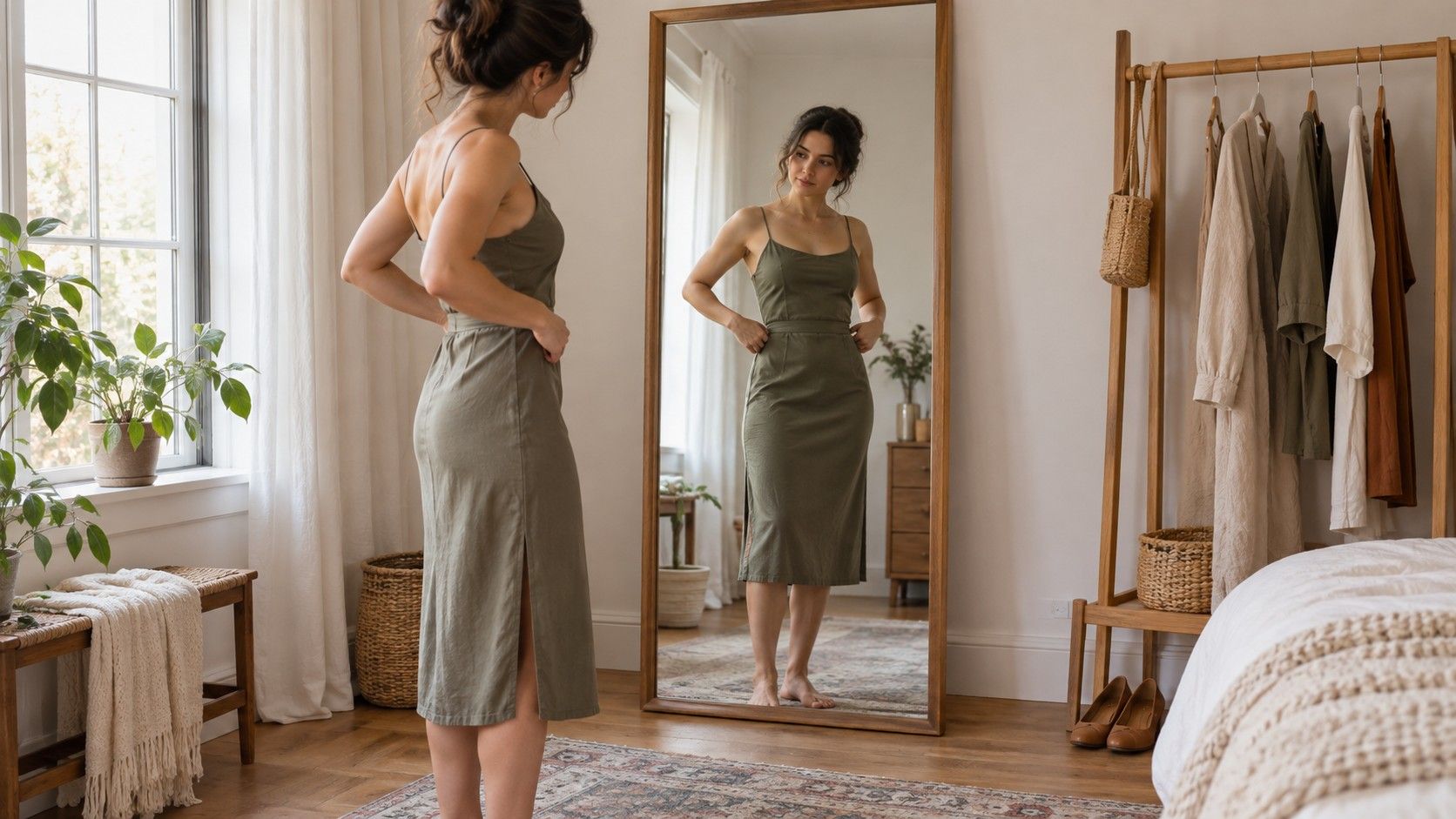
Use a full-length mirror and stand far enough away to see the floor. Fitting-room mirrors tilted backward can make legs look longer, while a phone held low does the opposite. Place the camera around waist or chest height if you want photos. Keep the distance and posture consistent, then compare the garment rather than scrutinising the body wearing it.
Finding your useful hem landmarks
Your knee and calf provide repeatable reference points. Mark the centre of the kneecap, the narrow area just below it, the fullest part of the calf and the narrow area above the ankle. A hem at each point creates a different break in the leg line. The effect is easy to see when you fold a longer skirt under temporarily and take photographs at the same distance.
The fullest calf point is often treated as forbidden territory in advice about the best skirt length for short legs. In practice, it can work very well, especially with a fluid skirt, a slit or a shoe that continues the colour of the outfit. If you dislike the line there, move the test hem a few centimetres up or down. Small changes can matter more than switching from the broad midi category to another label.
Check the front, side and back. A skirt can appear level from the front but rise over the seat at the back or dip at the sides. This is common and says more about the pattern than the wearer. A tailor can sometimes level the hem from the floor, but the garment should first settle on the body for a day because bias fabric and loosely woven cloth may drop unevenly.
| Hem landmark | What to observe | Useful fitting question |
|---|---|---|
| Above the knee | How much the hem rises when sitting | Can you walk, bend and sit without managing the skirt? |
| Just below the knee | Whether the edge catches at the back of the knee | Does it remain comfortable on stairs? |
| Mid-calf | The relationship between the hem and calf point | Would a slit or different shoe change the movement? |
| Above the ankle | How much ankle and shoe remain visible | Does the fabric clear steps and wet ground? |
Pinning gives a better answer than imagination. Use safety pins on the inside, fold the fabric evenly and ask someone to check that the temporary hem is level. Walk before taking a picture so the skirt settles. This makes it much easier to decide how to choose skirt length for a garment you already own.
How shoes change the line below a skirt
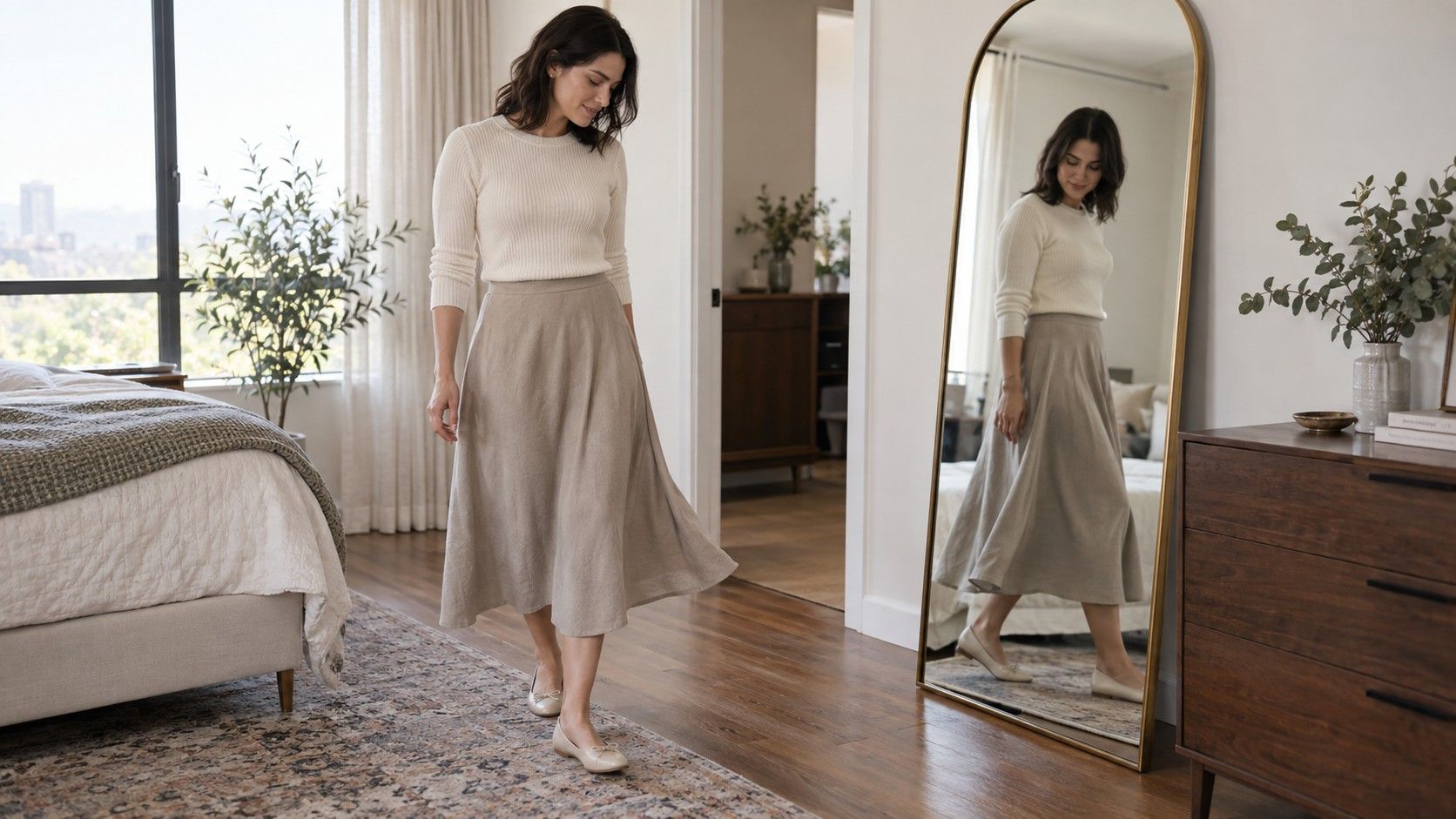
The space between hem and floor includes the shoe, so changing footwear can transform the same skirt. A low-cut ballet flat leaves much of the top of the foot visible. A loafer with a higher vamp covers more. An ankle boot creates another horizontal line near the hem, while a tall boot can visually continue underneath it. Heel height is only one part of the equation.
Try the skirt with the shoes that match its real destination. A midi worn to work may need to function with loafers and winter boots rather than just the sandals used in the fitting room. A maxi intended for holidays should clear flat shoes and uneven pavement. If one length needs a very specific heel to feel right, decide whether that pairing suits your actual week.
Colour continuity can make the lower part of the outfit feel more connected. Shoes close in colour to tights or to the skirt create fewer strong breaks. Contrast shoes make the foot a distinct feature. Both can look intentional. Someone seeking the best skirt length for short legs may prefer continuity on some days, but a bright shoe under a plain skirt can be the point of the outfit rather than a problem to solve.
Pay attention to the shoe opening while walking. A rigid ankle boot can catch the inner edge of a narrow midi. A pointed pump may slide out of the foot if the stride is shortened by a pencil skirt. The skirt and shoe need to cooperate mechanically as well as visually. Take several normal steps, climb stairs if possible and see whether the two garments collide.
Movement checks for midi and maxi lengths
Walk at your usual pace, not the careful fitting-room shuffle. A midi skirt should allow a natural stride. If it is narrow, slit placement provides room: a back slit is discreet, a side slit opens with one leg, and a front slit becomes more visible while sitting. Check where the slit ends and whether the lining has enough give. A decorative slit that remains stitched closed for transport will not help until those stitches are removed.
For a maxi skirt, use stairs and a curb as the test. The hem needs enough clearance that you are not stepping on it from behind. Hold a bag in one hand to learn whether you can lift the skirt easily with the other. Fabric that merely brushes a clean fitting-room floor may collect water outdoors or catch under a chair caster at work.
Sit in a firm chair and note how far the hem moves upward. Minis and fitted skirts can rise considerably because the fabric has nowhere else to go. A full skirt may spread rather than rise. Neither response makes a length wrong, but it changes coverage and comfort. If you expect to sit on public transport or at a desk, spend more than a few seconds in the chair.
Wind and static also change a real day. A light A-line can lift even when its standing length seems conservative. An unlined skirt may cling to tights and crawl upward. A slip, suitable lining or a slightly heavier cloth can solve those issues without changing the hem. Judge the whole construction before blaming the length.
Making alterations without losing the original shape
Shortening a straight skirt is often simple, but shaped hems need more planning. An A-line becomes wider toward the bottom, so cutting it shorter creates a new hem with a smaller circumference and can alter the overall flare. A pleated skirt may need each pleat re-formed. A border print, lace edge or graduated pattern can disappear entirely if fabric is removed from the bottom.
Some skirts can be shortened from the waist instead. This may preserve an ornate hem, but it can interfere with pockets, darts, zips and the intended hip shaping. Ask a tailor which route keeps the construction intact. Bring the shoes you plan to wear, and have the hem pinned while standing naturally rather than stretching tall.
Bias-cut skirts should hang before a final hem is marked. The diagonal grain can lengthen unevenly after gravity and wear relax the fabric. A patient tailor may let the skirt hang for at least a day, then measure from the floor at several points. Rushing this step can produce a wavy edge even when the first pinning looked level.
Test a reversible change before paying for a permanent one. Temporary hemming tape can give a rough impression, though pins or hand basting usually preserve drape better. Wear the trial length with two pairs of shoes and sit, walk and climb stairs. A successful hem is not the one that fits a formula. It is the one that keeps the skirt's shape, works with the rest of your wardrobe and behaves well during the hours you intend to wear it.