A body shape quiz can describe broad proportions, but an online shop needs more specific information. A label such as triangle or rectangle cannot tell you whether a shirt has enough room across the upper back, where a trouser rise will land, or whether a sleeve will reach your wrist. Useful body measurements for online shopping are simple numbers taken consistently and compared with the exact chart for the garment. They reduce guesswork, though they cannot promise a perfect fit because fabric, cut, construction, and personal preference still matter.
Separate body measurements from garment measurements
A body measurement follows the body at a defined point. A garment measurement records the finished clothing laid flat or measured around its construction. The two are related but should not be treated as interchangeable. If your hip measures 104 centimetres, trousers measuring exactly 104 centimetres around the hip would usually leave no room for movement unless the fabric stretches substantially. The difference between the body and finished garment is ease.
Ease can be positive, close to zero, or negative. A woven shirt normally needs positive ease so you can breathe, reach, and sit. A fitted stretch legging may use negative ease because the fabric is designed to expand on the body. An oversized coat has more intentional ease than a tailored jacket. That is why adding a fixed number to every measurement is unreliable. Read the fabric description, look for stretch information, and compare the intended silhouette with a similar garment you already understand.
Retailer charts do not all describe the same thing. A general “body size chart” tells you which body range the brand assigns to each size. A product page may instead list actual garment dimensions. Some flat measurements, such as a 52-centimetre chest width, must be doubled to estimate the circumference; others are already shown around the garment. Check the chart heading, diagram, unit, and note before comparing anything. A conversion error between inches and centimetres or a forgotten doubling can make a sensible number look wildly wrong.
Body shape measurements can help explain why one size fits differently at the bust, waist, and hip, but the largest number does not always dictate the decision. For a loose skirt, the waist and hip may both matter. For an open-front coat, shoulders and upper arms may be the limiting points. For a stretchy sleeveless top, bust circumference and garment length may be more useful than the waist. Start with the area that the garment cannot easily accommodate or alter.
Take bust, waist, hip, and inseam measurements consistently
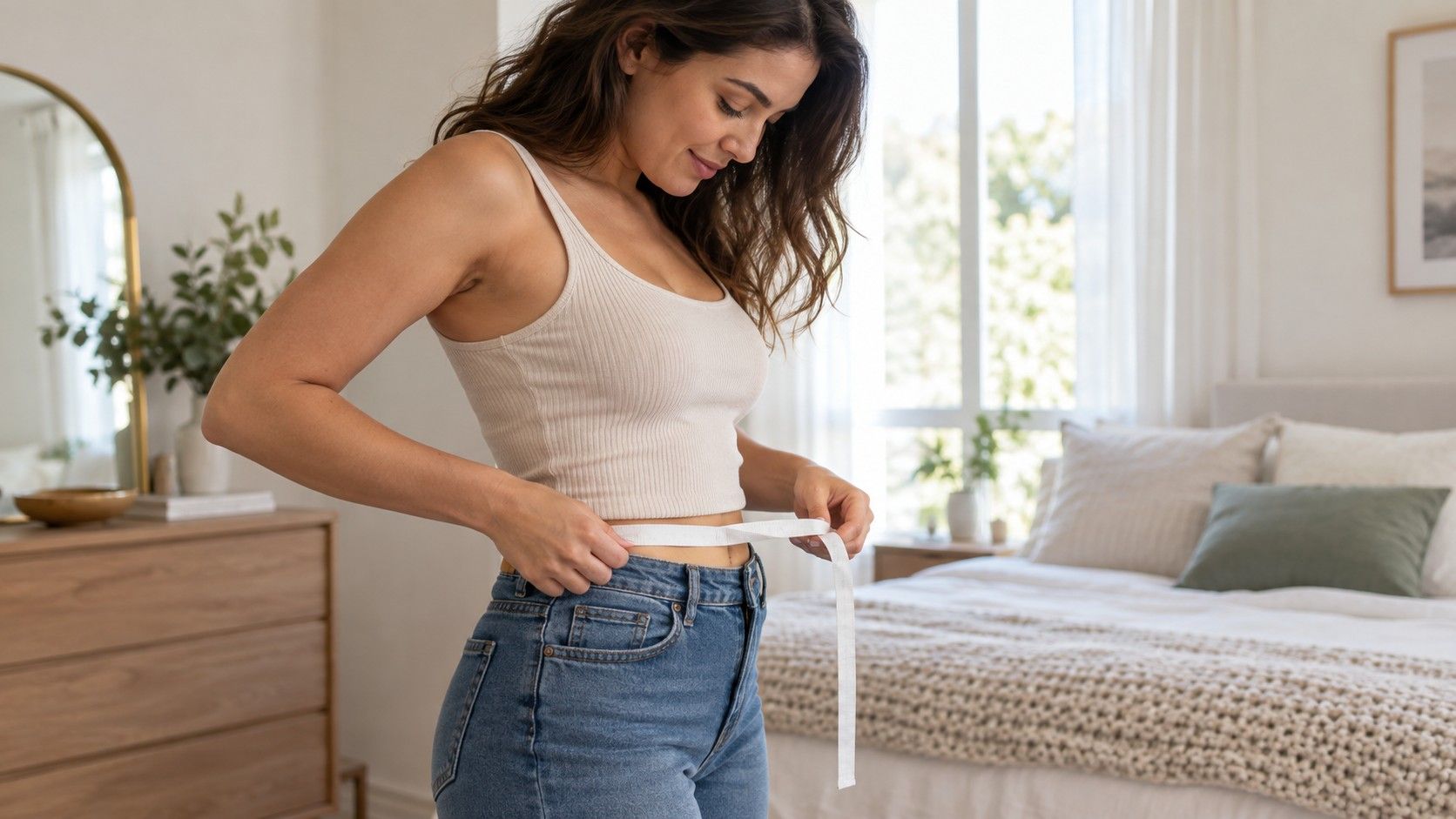
Use a flexible tape measure that lies flat without stretching. Measure over close-fitting clothes or the underwear you expect to wear with the garment; a padded bra, shapewear, or bulky layer can change the result. Stand naturally, breathe normally, and keep your feet in a comfortable parallel stance. The tape should touch the body without compressing it. If possible, use a mirror to check that it remains level across the back, or ask another person to read it.
For the bust measurement, wrap the tape around the fullest part of the chest and across the back, usually with the tape passing beneath the arms. Keep your arms relaxed rather than raised while reading. For fitted shirts and jackets, an upper-bust or chest measurement and the distance across the upper back may add useful context, because two people with the same fullest-bust number can distribute that measurement differently.
For the waist measurement, find the natural waist rather than assuming it is where every waistband sits. It is commonly the narrower area between the ribs and hips and often creases when you bend gently to one side. Tie a soft ribbon there if the tape keeps slipping. Then record the point where you prefer trousers or skirts to sit as a separate waistband measurement. A high-rise product and a low-rise product may need comparisons at different places on the torso.
For the hip measurement, circle the fullest area of the seat and hips. This point may be lower than expected, so check the tape from the side and move it slightly up and down to find the largest circumference. Keep feet together or only slightly apart for repeatability. If you often find trousers tight at the upper thigh while the hip fits, record the upper-thigh circumference too; it can be more informative than changing the entire body-shape category.
For the inseam, measure from the crotch seam point down the inside leg to the desired hem. It is usually easier and more accurate to measure a well-fitting pair of similar trousers laid flat. Straighten one leg without stretching it, then measure from the crotch seam to the hem. Record the shoe type and desired break because the same inseam will not serve cropped trousers, flat shoes, and heeled wide-leg trousers in the same way.
| Measurement | Reference point | Common mistake |
|---|---|---|
| Bust or chest | Fullest point with tape level across back | Holding arms up or pulling the tape tight |
| Natural waist | Natural crease between ribs and hips | Using the usual trouser waistband instead |
| Hip | Fullest circumference of hips and seat | Measuring only across the hip bones |
| Inseam | Crotch seam to intended hem | Ignoring shoe height and trouser style |
Read the size chart for the particular cut
Do not rely on the size stored in your account or on the label in a different brand. Open the chart attached to the product and identify whether it is a brand-wide chart or specific to that item. Then read product language for cut: slim, relaxed, oversized, cropped, longline, high rise, and low rise all change how the same nominal size behaves. Customer photographs can show general proportions, but another person's height and stated weight are poor substitutes for comparable measurements.
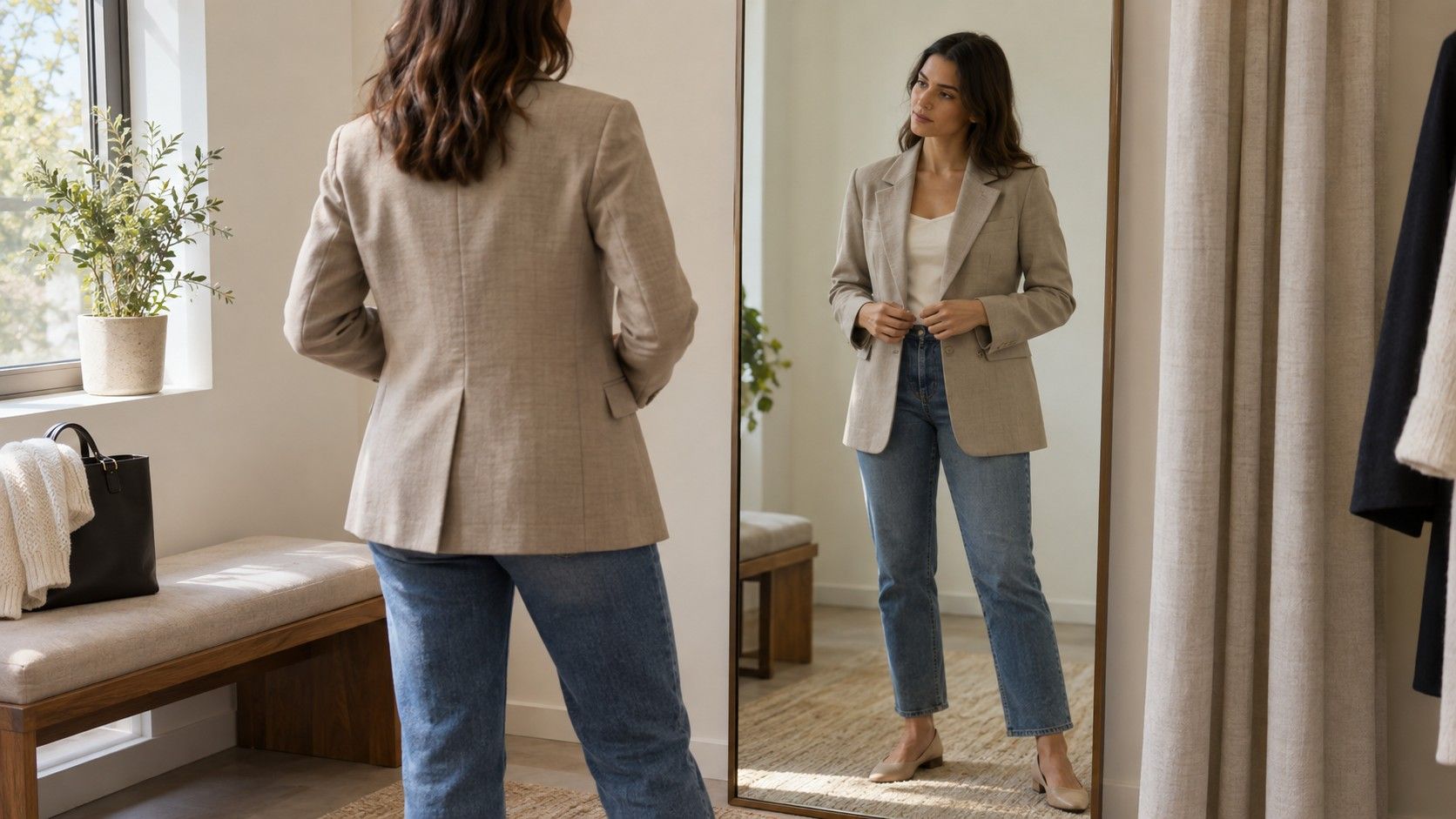
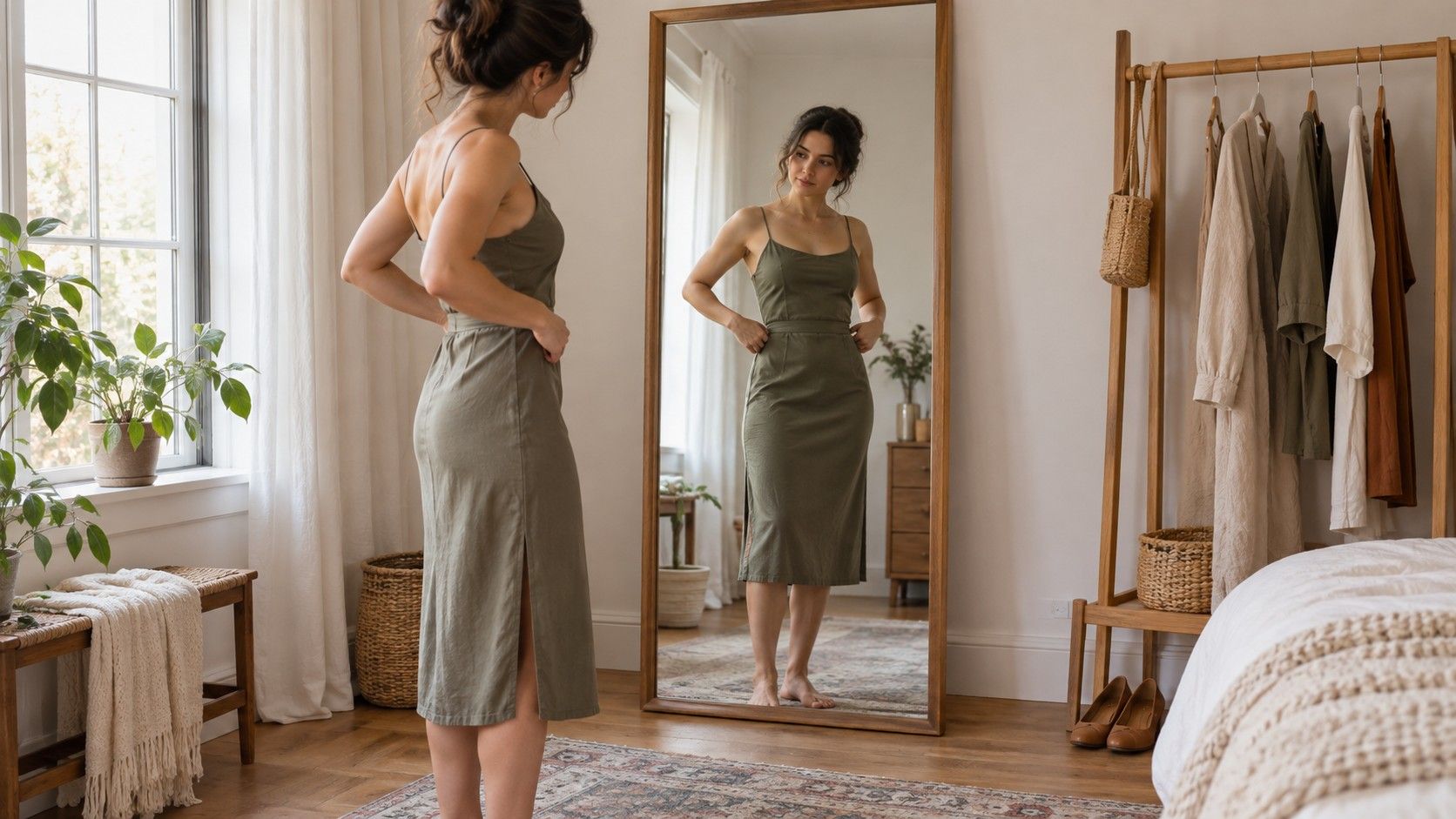
When your numbers cross sizes, decide which area controls the garment. A woven dress fitted through the bust and hip may need the larger of those two sizes, with the waist altered if necessary. An elastic-waist skirt may offer more tolerance at the waist but still require enough room through a non-stretch lining. A blazer should be assessed at the shoulders, upper arms, and buttoning point; waist suppression is often easier to alter than a shoulder that sits beyond or inside the intended edge.
Allow for the cut you want, not only the cut shown on the model. If the product is styled as oversized and you prefer a closer fit, compare its garment dimensions with a jacket you like before sizing down. Dropping a size can also shorten sleeves, narrow armholes, and shift pockets. Likewise, sizing up for more bust room may move shoulder seams and lower the waist of a dress. The chart helps expose these trade-offs; it does not choose the preferred one for you.
Fabric content offers clues but not a complete stretch estimate. A small percentage of elastane can improve recovery without making a heavy woven fabric very stretchy. Rib knits often expand differently across and along the body. Linings, waistbands, zips, seams, and embroidery may restrict an otherwise flexible material. If the listing gives a stretch description or garment measurement, give that more weight than a fibre percentage alone.
Compare the product with a favourite garment
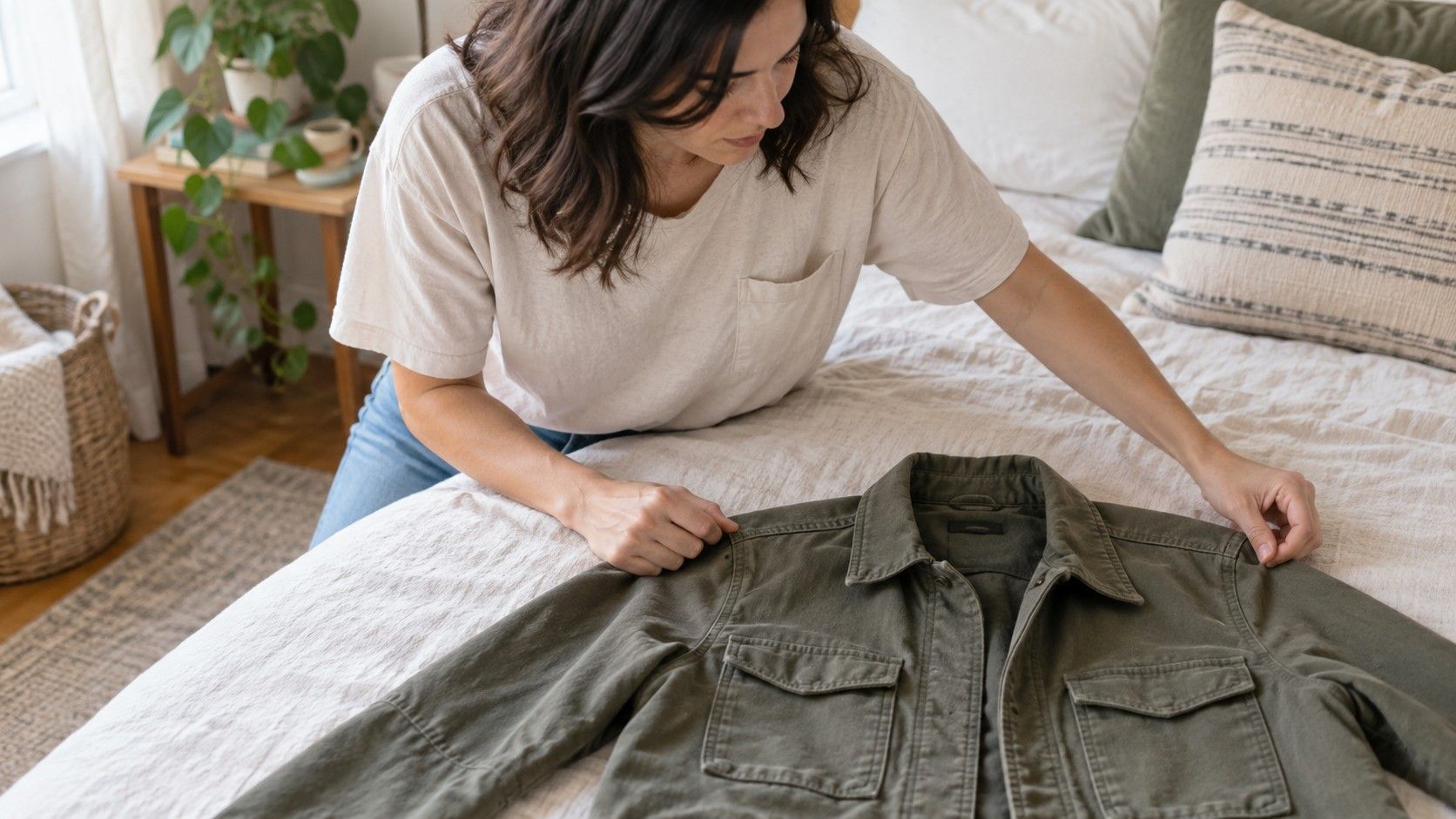
Garment-to-garment comparison is often the clearest way to interpret clothing size measurements. Choose a favourite item with a similar purpose and fabric: compare a woven shirt with a woven shirt, not with a stretchy T-shirt. Fasten buttons and zips, lay it on a flat surface without pulling, and smooth obvious wrinkles. Measure chest width from underarm to underarm, shoulder width between seam points, length from the high shoulder or waistband, sleeve length, rise, waist, hip, and hem as relevant.
Note how the retailer measures its item. Shoulder width can be meaningless on a raglan sleeve or a dropped-shoulder design. A trouser waist measured flat may curve and stretch, so doubling the relaxed width is only a starting point. Front rise and back rise together explain more about seated coverage than one rise number. For dresses, compare the shoulder-to-waist length if the listing provides it; an otherwise correct circumference cannot fix a waist seam that falls several centimetres above or below where you want it.
Use the favourite garment as a range rather than a sacred template. Record not only its dimensions but what you would change: sleeves could be one centimetre longer, the hip has three centimetres to spare, or the collar is comfortable only when open. This prevents you from copying the weaknesses of the reference item. It also makes online decisions more nuanced than “same chest width means same fit.” Construction and fabric can still produce a different result.
When the listing omits a decisive dimension, ask the retailer if that option is available or accept the uncertainty in the return decision. Do not invent precision from a model image. A final-sale item with no shoulder, rise, or length information carries more fit risk than a returnable item with a detailed chart. That does not make it a bad purchase, but the missing information belongs in the decision.
Keep a measurement note that remains useful
Store the date, unit, measurement points, and relevant clothing layer with the numbers. “Waist 78 cm” is less useful than “natural waist, over thin base layer, 78 cm, September.” Add preferred garment measurements from two or three reliable pieces and label the garment type. Measurements can change over time and can also vary slightly across the day, so treat them as a current reference rather than a score.
Recheck before an important, fitted, or final-sale purchase, and whenever older numbers stop matching your experience. You do not need to measure constantly. Small differences can come from tape placement, breathing, clothing, or normal body variation. Taking the same measurement twice and recording the result only when the readings are close is usually more useful than chasing a perfectly fixed number.
After an order arrives, compare the outcome with the note. Record concrete causes: waist fits but front rise feels short when seated; bust fits but upper arms restrict reaching; length works only with one shoe; fabric has less give than expected. If you return the garment, the lesson is not that your body failed a size. It is that this cut, material, or measurement relationship did not meet your preference.
A good note gradually becomes a personal fit map. It sits alongside, not beneath, any body shape quiz result. Proportions may suggest what you want to explore visually, while measurements explain whether a particular object is likely to fit and move as intended. Used together with garment dimensions, ease, and a realistic return policy, they make online shopping more informed without pretending uncertainty can be eliminated.